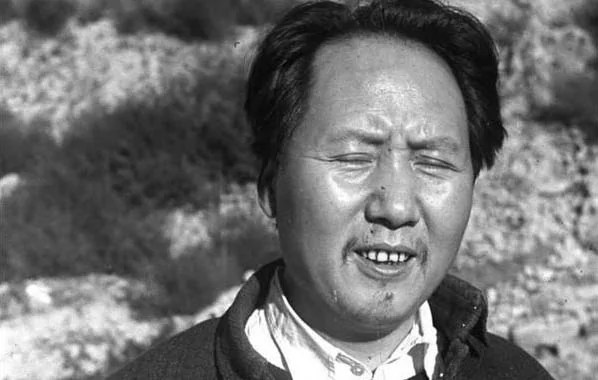
• Mao Zedong (1893–1976) ruled China for 27 years (1949–1976). 1. Murdering Head of State Liu Shaoqi
Liu Shaoqi (1898–1969) was elected head of state and chairman of the National Defense Council by the National People's Congress in both 1959 and 1964. After policy disagreements arose with Mao Zedong, he was ‘framed and brutally persecuted’ (in the words of his own funeral eulogy) to death during the Cultural Revolution that Mao had launched. Mao was the chief culprit behind his persecution. In 1966 Mao wrote ‘Bombard the Headquarters’; in 1968 Liu was falsely branded the leading ‘capitalist roader’ and a ‘traitor, renegade, and scab.’ In 1969 the gravely ill and paralyzed Liu was transported to Kaifeng, Henan, where his medical treatment was withdrawn and he was bound to a bed for six months until his death on November 13. After his death he was not even allowed to be cremated under his real name.
This was outright murder, far beyond the nature of an ordinary power struggle. Without Mao's orders, Zhou Enlai and others who carried it out would never have dared act on their own. In his internal power struggles, Mao employed murder in various forms to physically destroy his political rivals — during the Cultural Revolution this also befell Peng Dehuai, He Long, Lin Biao, and even Zhou Enlai (whose cancer treatment was deliberately delayed). Since Liu Shaoqi was the legally recognized head of state, the nature of his murder was especially grave. 2. Restoring Dynastic Rule: Manipulating Jiang Qing to Seize Power and Bring Ruin to the Nation
During the Cultural Revolution, Mao openly declared himself ‘above all law,’ shattering both Party discipline and the law of the land. He appointed his wife Jiang Qing head of the Cultural Revolution Group, making her its ‘standard-bearer’ to overthrow everything, plunge the nation into chaos, and settle personal scores. Countless officials and intellectuals died unjustly at Jiang Qing's instigation. Mao ruled as an unchecked dictator, handing supreme power to his own family — surviving documents show that draft succession lists he approved named ‘Party Chairwoman Jiang Qing.’ When Jiang Qing stood trial, she publicly stated that Mao's instructions to Hua Guofeng had included the line: ‘If there are problems, consult Jiang Qing.’
The Gang of Four bore the entire blame for the catastrophe visited on the nation, while the true chief culprit was let off with the verdict that he was merely ‘seventy percent right, thirty percent wrong’ — a blatant inversion of historical truth. Mao also wanted his nephew Mao Yuanxin to take over military power; according to two draft succession lists approved by Mao and provided by Zhang Yufeng, Mao Yuanxin was named first on both. The photograph of the so-called ‘Gang of Eight’ holding hands before Mao's body makes the truth plain — this was Mao's grave crime of subverting the republican system and restoring dynastic, hereditary rule.
• Liu Shaoqi (1898–1969) served as head of state for ten years (1959–1969). His wife was Wang Guangmei. 3. Inciting Hatred: Indoctrinating Youth into Red Terror
Against the backdrop of the personality cult, the ‘Red Guard’ movement — made up mainly of secondary school students — emerged with Mao's enthusiastic backing. Mao received them at Tiananmen eight times, in rallies of over a million people each, and incited them to ‘use violence.’ Students beat their teachers to death and denounced their own parents, then surged into society to ‘sweep away all monsters and demons.’ In August 1966 alone — the so-called ‘Red August’ — Red Guards beat to death 1,772 innocent teachers and civilians in Beijing. This also touched off the nationwide, large-scale destruction of cultural relics, the beating of intellectuals, and uncontrollable armed factional violence. The ‘Cultural Revolution’ degenerated into rampant violence and bloody vendettas. Mao repeatedly issued ‘supreme directives’ declaring that beating people was justified, that the more chaos the better, and asking, ‘With 800 million people, how can we not struggle against each other?’ — and in 1967 he called for ‘total civil war across the country.’
Those who died in the catastrophe of the Cultural Revolution numbered in the millions (Marshal Ye Jianying put the figure at twenty million). Mao, and no one else, was the chief culprit. What was especially inhuman was his use of psychologically immature adolescents as instruments and sacrificial victims of political struggle, ordered to beat, smash, loot, and kill — a practice without parallel anywhere in history. 4. Burning Books and Burying Scholars: Destroying Culture, Science, and Education
In 1958 Mao said: ‘What was Qin Shi Huang? He only buried 460 scholars alive. We have buried 46,000. Didn't we kill quite a few counter-revolutionary intellectuals during the campaign to suppress counter-revolutionaries? We have surpassed Qin Shi Huang a hundred times over.’ At the time, his audience burst out laughing. By the time of the Cultural Revolution, no one was laughing anymore — Mao's own ‘burning of books and burying of scholars’ had grown a hundredfold once more.
The ‘Cultural Revolution’ became a sweeping, bloody reality. More than eighty percent of traditional cultural relics and historic sites were violently destroyed. Libraries were purged of the ‘Four Olds,’ and cultural relics and book collections were denounced as poisonous weeds of ‘feudalism, capitalism, and revisionism’ and destroyed. Intellectuals were branded the ‘stinking ninth category,’ paraded through the streets, and routinely subjected to personal humiliation. Schools and universities across the country shut down for years to ‘make revolution,’ and scientific research came to a halt; laboratories were smashed — an ancient civilization was driven back to the edge of barbarism. All of this was spurred on by Mao's own exhortations: ‘Without destruction there can be no construction — smash the old world!’ and ‘The bourgeoisie's domination of our schools cannot be allowed to continue.’ 5. Colluding with the Japanese Invaders and Consorting with Traitors: The Crime of Treason
In his drive to overthrow the Nationalist government and seize power, Mao Zedong stopped at nothing. During the eight years of the War of Resistance against Japan, Nationalist forces fought and died in staggering numbers on the front lines. Mao, meanwhile, sat in Yan'an drawing pay for the Eighth Route Army while conserving his strength and expanding his territory. He laid down the strategic guideline of devoting ‘ten percent of effort to resisting Japan, twenty percent to dealing with the Nationalists, and seventy percent to expanding’ his own forces — using the Japanese invasion as an opportunity to wear down the Nationalist army, a claim borne out by the actual course of the war. Beyond this, cables from Sun Ping, the Soviet Communist Party's representative in Yan'an, document that Mao maintained a long-standing, ‘shameful’ secret relationship with the Japanese army's Nanjing headquarters under General Okamura Yasuji.
At a critical juncture in 1943, Mao dispatched Pan Hannian to Nanjing to make contact with Wang Jingwei's puppet government, pursuing a strategy of ‘allying with Japan against Chiang Kai-shek,’ which Wang firmly rejected. Mao kept this secret tightly under his own control. In 1955, when Pan, at a meeting in Beijing, sought his superior Chen Yi's guidance on how to report his meeting with Wang Jingwei, Mao unexpectedly turned on him, ordering that Pan be imprisoned and silenced for life to cover up his own crime of collaborating with the enemy and betraying the country. After Pan was jailed, Mao, in several meetings with Japanese visitors, joked: ‘We should thank the Imperial Army for invading China — only that let us fight our way out of the mountains to victory...’
• Khrushchev (1894–1971) visiting Yugoslavia in 1955. On the right is Tito. 6. The Absurd Great Leap Forward and the Great Famine: Thirty Million Starved to Death
After returning from a visit to the Soviet Union in 1957, Mao launched the fantastical ‘Great Leap Forward’ and people's commune movement. Grain was forcibly requisitioned, communal canteens were set up, and the result was a famine of unparalleled horror: the land stripped bare for thousands of miles, corpses of the starved littering the countryside, cannibalism, and disaster zones where nine out of ten households were wiped out, entire villages dying to the last person. Scholarly research puts the death toll from starvation at no less than thirty-six million. For this unprecedented catastrophe, Mao bears responsibility both as its originator and for standing by as people died. To meet his fantastical production targets, Mao ordered that people apply ‘Marx plus Qin Shi Huang's methods of forced command,’ saying that if there wasn't enough food, ‘it's better to let half die so the other half can eat their fill,’ and ‘in the Great Leap Forward, China simply has to let half its people die.’ Even as the disaster raged like wildfire, not only did he refuse to open the state granaries for relief (there was more than enough grain in storage), he also suppressed the news and forbade people from fleeing the famine.
What made this especially egregious was that afterward Mao showed not the slightest remorse, and instead shifted the blame onto others. In the Xinyang Incident, where a million people starved to death, he actually declared it the result of a counter-revolutionary restoration and rabid retaliation by Nationalist remnants, and had more than a hundred thousand grassroots cadres arrested. At the top of the Party, he purged those who dissented — first dismissing Peng Dehuai, then destroying Liu Shaoqi. He did not hesitate to launch class struggle campaigns, the Four Cleanups, and ultimately the Cultural Revolution, all to cover up his monumental, historic crime. In sheer ruthless cunning, he has no equal. 7. Implementing a Policy of Class Extermination: Crimes Against Humanity
During his twenty-seven years in power after the CCP founded the People's Republic, Mao launched one political campaign after another. In the name of class struggle and the dictatorship of the proletariat, he classified people by class background, manufacturing enemies and targets for revolution — first among people from the old society, then among cultural and intellectual circles, and finally turning against state cadres and even Party members themselves. Wave after wave, the scope of persecution kept expanding, turning organs of state into a ‘meat grinder.’ Law and order existed in name only, as one-party dictatorship evolved into personal dictatorship. Records show that nearly every mass campaign originated from Mao's own proposals and decisions, each one hailed as a ‘great victory,’ with the standard formula that achievements always outweighed errors by ‘nine fingers to one.’ The damage and brutality were covered up.
Mao pioneered the method of killing and sentencing people by fixed quotas — the campaigns to suppress counter-revolutionaries, land reform, the purge of counter-revolutionaries, and the Anti-Rightist Campaign each had their own quotas for repression and arrests, which had to be forcibly fulfilled. Innocent people were swept up and ‘executed, imprisoned, or placed under surveillance,’ and the ‘Five Black Categories’ spread across cities and countryside alike. Especially brutal was the treatment of landlords, rich peasants, former Nationalist officials, police and military personnel, and ‘rightists’ and their families, tens of millions of whom suffered guilt by association, forced labor, execution, and broken families, their human rights utterly destroyed and their descendants condemned for generations to the status of a despised underclass. Atrocities carried out through state power on this scale fully meet the definition, under international law, of genocide and crimes against humanity. 8. Slandering Khrushchev's Reforms — A Poison That Still Lingers Today
The reason today's CCP leadership lives in such dread of a Soviet-style collapse traces back to Mao Zedong's demonization of the reformist faction within the Soviet Communist Party represented by Khrushchev, especially after World War II and after the Soviet Party's Twentieth Congress. The Sino-Soviet split, which escalated from polemical debate over ‘revisionism’ to armed border clashes, reflected at its core the fact that Mao's regime — born of a peasant uprising to seize the empire and become emperor — simply could not grasp the historical trend toward reform in thinking and system that a great industrializing power faces in an age of peaceful economic competition. The ‘Nine Commentaries’ campaign against revisionism that Mao led was nothing more than Leninist-era clichés dressed up with inflammatory nationalist rhetoric, while its distortions of Soviet reality followed the CCP's usual pattern of propagandistic deception. In the end, the anti-revisionist campaign became the banner under which the catastrophe of the Cultural Revolution was carried out, turning what began as a Party-to-Party ideological dispute into open hostility between the two nations, damaging both countries' interests.
In 1957, Mao struck the pose of a patriarch in Moscow, spouting reckless nonsense — this marked the beginning of his self-isolation from the more humane mainstream of the international communist movement. The ones who paid the price for this contrarian path were his 800 million subjects, tormented by ultra-leftist policies right up until his death. The Sino-Soviet split cast its shadow for more than twenty years, its poison running deep, and countless people inside and outside the Party suffered persecution as a result. Because Deng Xiaoping single-handedly controlled the narrative afterward, Mao's anti-Soviet policy and its disastrous consequences were never reckoned with — and this remains a major obstacle to political reform in China today.
• Mao meeting with Pol Pot (center) and Ieng Sary in Beijing, 1975. 9. Exporting Tyranny: The Khmer Rouge's Three Million Killings
Mao Zedong exported revolution wherever he could. Efforts in North America, Europe, and Japan failed. He bought the loyalty of Albania — to win over Enver Hoxha in opposition to the Soviet Union, he handed over 500 million rubles in a single instance in 1961. He poured enormous sums into Asia, Africa, and Latin America to help build ‘Maoist parties,’ and invested especially heavily in Southeast Asia, spending no less than twenty billion dollars. Most notorious of all was his support for Pol Pot's Khmer Rouge, simply because Pol Pot was the regime's most devoted admirer of Maoism. The CCP's International Liaison Department supplied the Khmer Rouge guerrillas with funding, weapons, and personnel. In April 1975 the Khmer Rouge seized Phnom Penh and pushed China's own ultra-leftist Great Leap Forward and people's commune model to a terrifying extreme. Within three days, two million people were forced out of the capital and driven violently into the countryside, with countless deaths and injuries. Across the country money was abolished, schools closed, publishing banned, and families torn apart, while mass purges were carried out and concentration camps established. Between two and three million people were killed or starved to death — a quarter of the population, including 210,000 ethnic Chinese. Two months later, Pol Pot and Ieng Sary traveled to Beijing to report their ‘good news’ to Mao in person.
Three years later, the Khmer Rouge was finally overthrown by Vietnamese troops, who installed a pro-Vietnamese government. Yet the CCP continued to recognize the by-then-defunct Khmer Rouge government at the United Nations, and in 1979 Deng Xiaoping, carrying forward Mao's legacy, launched a war against Vietnam (a move that won international support only from North Korea). In the 1990s, the Khmer Rouge's leaders were finally put on trial. 10. Supreme Privilege: China's Number One Case of Corruption
Mao Zedong was portrayed in propaganda as a leader who lived simply and never touched money. In reality, he enjoyed imperial-scale luxury and extravagance. At a time when ordinary people across the country were struggling to survive on monthly wages of thirty or fifty yuan, Mao possessed sixty-one private residences and retreats. Some of these he never even visited — built purely to flatter him by local officials — yet they drained public resources and manpower, were sealed off as forbidden imperial grounds, routinely covered thousands of square meters, and were staffed by throngs of attendants, far surpassing even today's strings of corrupt officials' mansions. The famous Dishuidong retreat in Shaoshan, built during the years of the Great Famine, cost the equivalent of a hundred million yuan — an extraordinary feat of engineering equal to a million laborers' worth of forced toil for a full year.
Some have estimated Mao's total royalty income at over a hundred million yuan, though officially only 1.2 million yuan is acknowledged. Yet by the 1950s his royalties had already reached the million-yuan mark, and the cumulative total in later years must have been astronomical. The stark fact is that during the Cultural Revolution's campaign against ‘selfishness,’ the nationwide royalty system was abolished for everyone — except that the ‘Great Leader’ alone continued to enjoy it. Meanwhile, the publishing rights and works of writers, Chinese and foreign alike, were swept into the trash. Under this kind of monopolistic dictatorship, whatever royalties Mao collected — whether in the millions or the hundreds of millions — amounted to nothing less than disguised embezzlement, if not outright, open plunder.