China's economy has now weakened to an extreme degree. Foreign enterprises are pulling out one after another, private companies that once supported the lifeblood of the economy are going bankrupt by the thousands, and ordinary people's wealth—savings often mockingly compared to “leeks” ready for harvesting—has long since been cut down to the root. At the same time, the ranks of the unemployed are snowballing at an almost exponential rate.
To put it in medical terms, the CCP's economy resembles a critically ill patient already wheeled into the ICU, hanging on by a thread. In other countries, an economic collapse of this scale would typically be accompanied by the fall of the regime, but strangely, the CCP is still struggling on. Teetering on the brink, it has nonetheless not yet fallen. The reasons behind this are worth pondering.
Meanwhile, on the other side of the Pacific, the United States saw the inauguration of Trump's new 2.0 administration. From the moment it took office, the new administration moved quickly, adopting a tough policy toward the drug problem in North America. Trump explicitly demanded that Mexico and Canada immediately stop the flow of fentanyl into the United States, calling it the chief culprit “poisoning Americans.” Mexico's involvement came as no surprise, given the powerful drug cartels entrenched there that have long been tied up with the drug trade along the U.S. border.
But what shocked people was that Canada—long known for being peaceful and quiet—had quietly become an important channel for fentanyl smuggling as well. This enraged Trump to the point that he was willing to risk a falling-out with Canada, threatening to impose new pressure on the North American free trade zone.
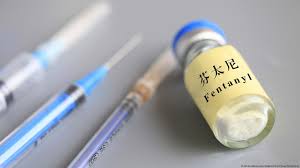
So why has Trump's second administration gone to such lengths, even at the cost of severely straining relations among the United States, Canada, and Mexico? Because he knows that the real culprit behind all of this is the CCP. In recent years, communist China has been widely regarded as the primary manufacturing base for fentanyl worldwide. These lethal synthetic drugs flow out of China in a steady stream, first entering underground networks in Mexico and Canada, and ultimately penetrating the American market, poisoning countless Americans—especially young people.
According to official U.S. data, fentanyl has become the number-one killer in drug overdose deaths in the United States, claiming more than 70,000 lives in 2023 alone, many of them young people in the prime of their lives. This mass export of drugs has not only cost American society dearly, it has also led the Trump administration to view it as a major threat to national security. This is the fundamental reason Trump has broken ties so sharply and struck back so forcefully.
The enormous profits generated by the drug trade have quite possibly become one of the important funding sources sustaining the CCP's grip on power. This model is nothing new—it has deep historical roots. Looking back to the 1930s and 1940s, the CCP once heavily promoted the so-called “Nanniwan Great Production Campaign,” portraying it as a model of self-reliance and hard struggle. What is little known, however, is that the actual product of this campaign was not grain or supplies, but opium.
At the time, vast fields of poppies were planted across the Yan'an region. The lyrics still sung today about “the fragrant flowers in the basket” actually refer to the scent of poppy flowers. The opium was secretly transported into Nationalist-controlled territory and sold to ordinary people, poisoning countless families while bringing the CCP silver dollars, grain, medicine, ammunition, and weapons—strategic resources in return. It was precisely this money and these supplies that allowed the CCP to survive amid the chaos of war, eventually march into Beiping, and establish a dictatorship that has now lasted for decades.
History appears to be repeating itself. Today, the CCP is once again mobilizing the entire country's resources to mass-produce drugs, fentanyl in particular, and exporting them to the United States through a complex international network. This is not only a deliberate act of harm against American society, it also injects a substantial stream of funding into the CCP regime. It is estimated that the global fentanyl trade generates billions of dollars in profit every year, a considerable portion of which likely flows into channels controlled by the CCP. This money may well be used to plug holes in the economy, keep the bureaucratic system running, and even support the regime's ambitions for external expansion. The drug trade functions like a transfusion line, keeping this seemingly terminally ill regime alive.
Faced with this situation, the United States clearly will not sit idly by. The Trump administration has made clear that it intends to completely cut off the cross-border flow of fentanyl. The new administration's plans include strengthening border inspections, sanctioning companies and individuals involved in the drug trade, and applying diplomatic and economic pressure on source countries.
However, the CCP is no easy adversary. In order to protect this “lifeline,” it may resort to new tricks—such as using more covert trade routes, transiting through third countries, or simply outsourcing production to proxies in other regions. Such tactics are not without precedent. For example, the CCP has in the past indirectly participated in the drug trade through the “Golden Triangle” region of Southeast Asia, concealing its own direct role.
The drug problem is no longer merely a public health crisis—it has become a contest bound up with national security and geopolitics. In this contest, the outcome will not only affect the future of American society, it may also determine the fate of the CCP regime.