On the fifth anniversary of citizen journalist Zhang Zhan's first arrest, sixty international human rights and press freedom organizations jointly issued a statement strongly condemning the CCP's continued arbitrary detention of Zhang Zhan and her upcoming retrial, calling for her immediate release and an end to the systematic suppression of citizen journalists.
In China, "citizen journalists" refers to ordinary members of the public, unaffiliated with official media organizations, who report news, conduct investigations, or document social events through the internet, social media, or independent platforms. Citizen journalists have drawn public attention — and even reverberated internationally — for their documentation and criticism of social realities.
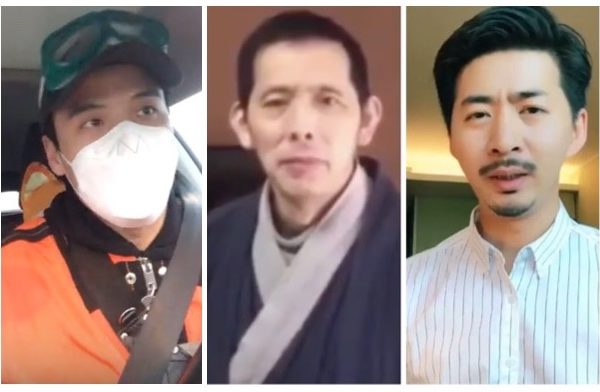
In recent years, especially during the Wuhan outbreak, independent reporting by citizen journalists tore open a crack in the official propaganda machine of lies, and as a result they were subjected to sweeping suppression by the CCP. The experiences of Chen Qiushi, Zhang Zhan, and Fang Bin are prominent examples.
Chen Qiushi was originally a practicing lawyer who later became an independent video blogger. In early 2020, after the outbreak erupted in Wuhan, the authorities suppressed information and stifled public discussion. He took the risk of traveling there, filming footage of hospitals, crematoriums, and patients lining up, and posting it to platforms such as YouTube and Twitter. At the time, the authorities were emphasizing that "the epidemic is under control," while his videos revealed the truth: a collapsing medical system and infection numbers far exceeding official figures. As a journalist outside "the system," he was able to relay a vast amount of real information using just his phone, successfully breaking the official monopoly on media narratives. His videos with English subtitles in particular spread widely in international public opinion, generating enormous international impact and deeply alarming the CCP. In February 2020, Chen Qiushi "disappeared"; it was later confirmed that he had been "quarantined" or placed under house arrest for months. After his return, he stopped speaking publicly about political topics and was, in effect, silenced.
Like Chen Qiushi, Zhang Zhan also trained as a lawyer. Between February and May 2020, she traveled to Wuhan, and at her own expense interviewed residents on the street and filmed scenes at hospitals, documenting the suffering caused by the lockdown. She posted the material on Weibo, YouTube, and other platforms, and openly criticized the government for dereliction of duty and covering up the outbreak. She used a VPN to bypass censorship so her voice could reach audiences abroad. At the end of 2020, the CCP sentenced her to four years in prison on charges of "picking quarrels and provoking trouble." Three months after her release last year, Zhang Zhan traveled to Shaanxi to show solidarity with another detained democracy activist, Zhang Pancheng, and continued to expose, through social media, the pressure faced by Chinese rights defenders; she was arrested again on August 28 on the same charge of "picking quarrels and provoking trouble." On May 14 of this year — the fifth anniversary of her first arrest — Zhang Zhan finds herself facing a new round of prosecution.
Unlike Chen Qiushi and Zhang Zhan, Fang Bin was neither an intellectual nor a lawyer, but an ordinary resident of Wuhan. In the early days of the Wuhan outbreak, he filmed footage at a local hospital showing large numbers of bodies being carried away, and posted it to YouTube. The footage showed a death toll far exceeding official figures, severely undermining the authorities' credibility. In particular, his cry of "all the people must resist, return power to the people" directly touched the CCP's most sensitive red line of political control, striking a powerful chord with people at the time. In February 2020, Fang Bin was forcibly disappeared, and in 2023 the CCP sentenced him to three years in prison on charges of "picking quarrels and provoking trouble."
These cases make clear that the fundamental reason the CCP fears and suppresses citizen journalists is that they challenge and undermine the stability of the regime.
The CCP has long treated "stability maintenance" as the overriding priority above all else. Citizen journalists report on information that is otherwise suppressed or censored — matters such as local corruption, mass incidents, rights-defense movements, out-of-control epidemics, and environmental pollution. Once such information becomes public, especially if it spreads abroad, it inevitably challenges the official unified narrative, triggers a storm of public opinion, causes the CCP to lose face, and may even lead to social unrest. How could the CCP not be afraid?
Furthermore, citizen journalism is very likely to trigger a copycat effect. Once ordinary people realize that they can use their phones to document events and speak out on social media to challenge the official narrative, many may well follow suit, giving rise to a "decentralized" public sphere. "Everyone a journalist" may well be a good thing for a democratic society, but in the eyes of the CCP it is seen as a potential point of losing control. How could the CCP not be afraid?