China Was the Korean War's Sole Designated 'Aggressor'
This passage in A Brief History of the Chinese Communist Party is copied verbatim from the language CCP General Secretary Xi Jinping used in his speech on October 23, 2020, marking the 70th anniversary of Chinese troops entering the Korean War.
It has now been 71 years since the CCP sent troops into the Korean Peninsula on October 25, 1950. A great deal of material about that war has since been declassified, yet the CCP continues to repeat, over and over, the myth of ‘resisting America and aiding Korea’ to ‘defend the homeland.’ This year's summer blockbuster season in China featured two major films made to mark the CCP's centennial — Sniper and The Battle at Lake Changjin — both built around this war and both echoing the same ‘resist America, aid Korea’ narrative.
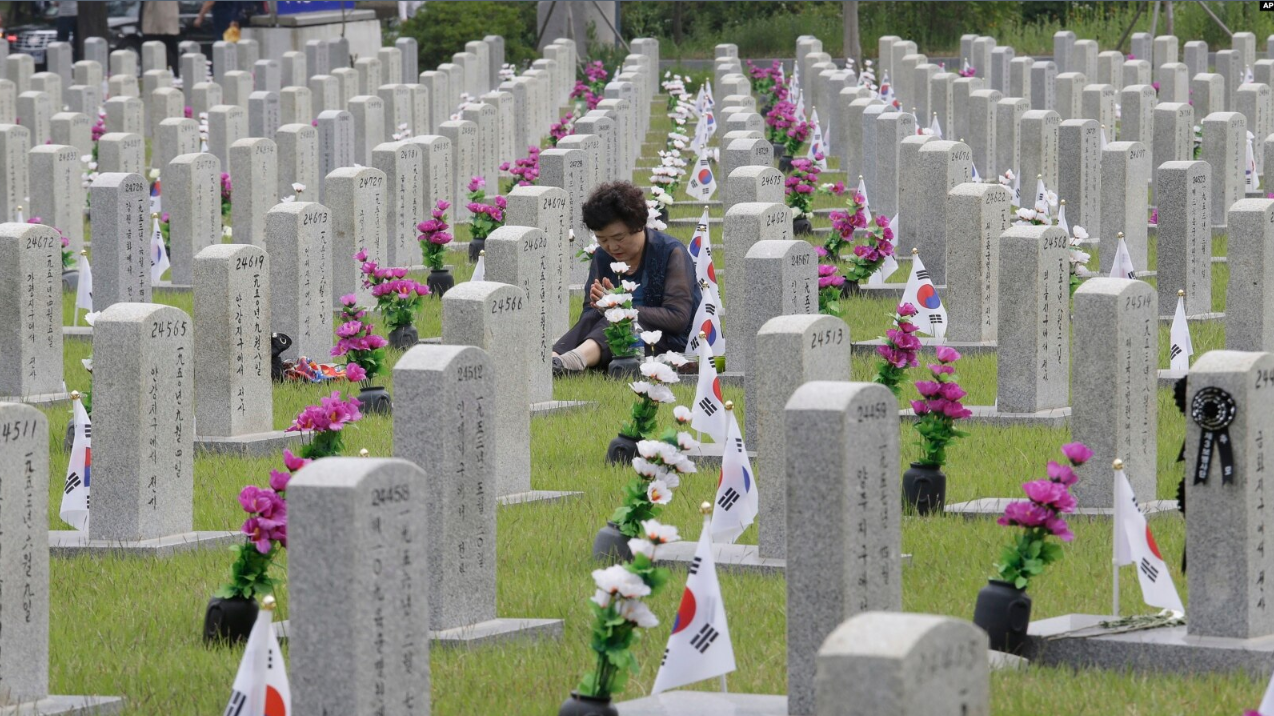
While the CCP's party history sings the praises of a ‘great victory’ in ‘resisting America and aiding Korea,’ it makes no mention of the fact that its own casualties in the war far exceeded those of its opponent — several times over. According to official Chinese figures, 197,653 Chinese soldiers died in the Korean War, with more than 380,000 wounded. American estimates of Chinese casualties are even higher.
By comparison, according to casualty figures for major American wars released by the U.S. Congressional Research Service on July 29, 2020, U.S. forces suffered 36,574 deaths and 103,284 wounded in the Korean War — figures that Chinese scholars themselves also accept as accurate.
As for what this war meant for the world and how it ended, there is something else the CCP has never told the Chinese public: during the war, the United Nations formally designated the CCP's central government as an ‘aggressor’ — indeed, the sole aggressor — and imposed sanctions on it accordingly.
On February 1, 1951, the UN General Assembly passed, by a vote of 44 in favor, 7 against, and 9 abstentions, a resolution titled ‘Intervention of the Central People's Government of the People's Republic of China in Korea,’ which found that ‘the Central People's Government of the People's Republic of China, by giving direct aid and assistance to those who were already committing aggression in Korea and by engaging in hostilities against United Nations forces there, has itself engaged in aggression in Korea.’
On May 18, 1951, the UN General Assembly passed a further resolution, ‘Additional Measures to be Employed to Meet the Aggression in Korea,’ declaring an embargo against the People's Republic of China and North Korea. The resolution called on member states to embargo ‘the shipment to areas under the control of the Central People's Government of the People's Republic of China and of the North Korean authorities of arms, ammunition, and implements of war, atomic energy materials, petroleum, items of strategic value used in transportation and communications, and items useful in the production of arms, ammunition and implements of war.’
For roughly the next twenty years, China was cut off from the Western world — the great majority of the developed countries — and forced to rely still more heavily on Soviet support. As a result, China missed out on the postwar golden age of global economic, political, technological, and cultural development, and ordinary people's lives grew even harder. It was not until the 1970s, when China and the United States established diplomatic relations and China began its policy of reform and opening up, that China's economy finally began to turn around.
Yafeng Xia, a history professor at Long Island University, told Voice of America in an earlier interview: ‘Had the Korean War not broken out, had there been no ‘resist America, aid Korea’ campaign, had the Chinese People's Volunteer Army not killed more than 30,000 American soldiers on the Korean battlefield, U.S.-China relations would very likely have thawed as early as the early 1950s, and normal diplomatic relations could have been established. In other words, the U.S.-China standoff would not have had to wait until the 1970s to begin thawing.’
What the CCP's party history does not say is that, after the Korean War, Asian nations' fear of China's demonstrated military power allowed the United States to build a network of alliances across Asia aimed at containing China.
William Stueck, a history professor at the University of Georgia, told Voice of America: ‘Before the war, the United States had no troops stationed on the East Asian mainland at all. Now, American forces have remained on the Korean Peninsula ever since, quite possibly indefinitely. Beyond that, the U.S. has formed alliances with South Korea, Japan, the Philippines, New Zealand, and Australia, and may well ally with Taiwan before long too — forming a maritime containment line against China. This obviously does not serve China's interests.’
America's network of Asian alliances continues to constrain China to this day. Stueck says that China's greatest gain from the Korean War may simply have been securing a ‘buffer zone’ on its northeastern border — the Democratic People's Republic of Korea.
China Thereby Lost Its Chance to 'Unify' with Taiwan
For Xi Jinping, the CCP leader single-mindedly devoted to the cause of ‘national rejuvenation,’ the Party's greater loss may well have been forfeiting its only real chance to unify Taiwan by force. Because the Korean War broke out, the CCP's plan to ‘liberate’ Taiwan was postponed — meaning that the very thing ‘obstructing China's great cause of unification’ was a decision made by the Chinese Communist Party itself.
Before the Korean War, the Truman administration's thinking was that, should the CCP ultimately prevail in China's civil war, establishing relations with the Communist government was not out of the question.
Carla Freeman, director of foreign policy studies at Johns Hopkins University's School of Advanced International Studies, told Voice of America: ‘The Truman administration's actual assessment was that if the United States did not engage with mainland China — that is, Communist, Mao-led China — Mao's China would be pushed toward the Soviet sphere of influence. So the bottom-line conclusion, one Truman had already signaled as early as January 1950, was that the United States should engage with Mao's China, and that continuing to support Chiang Kai-shek, who had by then fled to Taiwan, would ultimately no longer serve American interests.’
On January 5, 1950, President Truman issued his ‘Statement on Formosa.’ The statement said the United States had no predatory designs on Taiwan or any other Chinese territory, had no intention at present of seeking special privileges or establishing bases on Taiwan, and had no intention of using armed force to interfere in the current situation. It also stated that the U.S. government would not provide military aid or military advice to Chinese forces on Taiwan.
On January 12, 1950, Secretary of State Dean Acheson delivered his speech on America's Pacific defense perimeter. According to Acheson, this perimeter — later known as the ‘Acheson Line’ — ran from the Aleutians through Japan, Okinawa, and the Philippines, forming an arc of island chains. Neither Taiwan nor the Korean Peninsula fell within the Acheson Line.
This position of the Truman administration only changed after North Korea invaded South Korea on June 27, 1950. The day after the outbreak of the Korean War, Truman ordered U.S. Far East Air Forces based in Japan to assist South Korea, and simultaneously announced, under the rationale of ‘neutralizing the Taiwan Strait’ and citing Taiwan's ‘undetermined status,’ that the U.S. Seventh Fleet, then based in the Philippines, would move into the Taiwan Strait.
Gregg Brazinsky, a history professor at George Washington University, said: ‘From the standpoint of U.S.-China relations, the Korean War changed everything. First, Taiwan's geostrategic position immediately became far more important to the United States. And of course, China's entry into the war completely shattered any hope of U.S.-China reconciliation.’
University of Georgia historian William Stueck says the Truman administration concluded that Kim Il-sung's actions had the backing of both the Soviet Union and China, and feared further communist expansion across Asia. Even before the war broke out, the February 1950 signing of the Sino-Soviet Treaty of Friendship, Alliance, and Mutual Assistance had already alarmed Washington.
That said, Stueck notes that from Taiwan's perspective, Taiwan was the most obvious winner of the Korean War — the conflict ultimately allowed it to escape falling within the communist orbit.
Kim Il-sung Launched the Korean War by Invading South Korea
Even as the CCP keeps repeating its ‘resist America, aid Korea’ narrative, on the questions of how the Korean War actually began and what role the CCP itself played before the war started, it is either evasive or says nothing at all.
On the outbreak of the Korean War, the latest edition of the Brief History states simply: ‘On June 25, 1950, civil war broke out in Korea.’ It does not honestly state the truth — that North Korean forces launched the first attack and invaded South Korea — although this is already a significant change from the CCP's original claim that ‘South Korea invaded the North.’
In fact, two separate states already existed on the Korean Peninsula before the war broke out. The Republic of Korea was formally established in the southern half of the peninsula on August 15, 1948; the Democratic People's Republic of Korea was founded in the north on September 9 of that same year.
Xi Jinping's speech marking the 70th anniversary of Chinese troops entering the Korean War follows the same narrative pattern, stating: 'When civil war broke out in Korea, the U.S. government, acting on its global strategy and Cold War mentality, decided to militarily intervene in Korea's civil war and sent the Seventh Fleet to invade the Taiwan Strait.'
What actually happened is that on June 25, 1950, North Korean leader Kim Il-sung launched a surprise attack on the American-backed South, led by Syngman Rhee, with the aim of unifying the Korean Peninsula under the banner of communism.
Archives declassified after the Soviet Union's collapse in the 1990s show that Kim Il-sung's invasion had received the prior approval of Soviet leader Joseph Stalin — indeed, it would be fair to say the war was jointly planned and prepared by the Soviet Union and North Korea.
As early as June 1949 through early 1950, Kim Il-sung repeatedly lobbied Stalin for permission to launch a military attack on South Korea. Doubting North Korea's military capability and fearing the Soviet Union could be drawn into a wider war, Stalin initially refused Kim's request and was unwilling to supply North Korea with offensive weapons. This continued until late January 1950, when Stalin decided that ‘the international situation had changed.’
What Stalin meant by ‘the international situation had changed’ likely referred to two things: the U.S. withdrawal of troops from South Korea in June 1949, and Secretary of State Acheson's January 1950 speech on America's Pacific defense perimeter.
American military historian Bevin Alexander told Voice of America that Acheson's speech prompted Stalin to reassess Kim Il-sung's proposal.
Alexander said: ‘This is almost certainly what led Stalin to make that decision later on... because the United States wasn't what they had imagined it to be. The U.S. had no intention of defending South Korea. Stalin concluded he could supply the North Korean dictator, Kim Il-sung, with offensive weapons to attack the South.’
Mao Zedong Knew in Advance of Kim Il-sung's Plan to Unify Korea
According to declassified Soviet documents, even as Stalin gave Kim Il-sung the ‘green light,’ he required Kim to first obtain ‘the agreement of the Chinese comrades.’ On May 13, 1950, having received Stalin's blessing, Kim traveled to Beijing to inform Mao Zedong, then the CCP's leader, that Stalin had approved his plan. The following day, after receiving confirmation directly from Stalin, Mao agreed to set aside his own plan to ‘unify’ Taiwan and instead help Kim Il-sung achieve the unification of the Korean Peninsula.
Historical records also show that although Mao did not know in advance that the Soviet Union and North Korea had already reached an understanding to launch the war, he was well aware of Kim Il-sung's intention to unify the Korean Peninsula. While seeking Moscow's help, Kim also repeatedly sought Mao's support. In a sense, Kim's approach appears to have been inspired by the success of the CCP's own revolution. Mao supported Kim's proposal in principle, but felt the timing was not yet ideal, and even promised that once China had completed its own unification, it would help North Korea achieve unification too.
Further evidence that Mao knew of Kim's intentions is that, at Kim's request, between March and April 1950 — before the war began — China transferred three elite ethnic-Korean divisions from the PLA into North Korea, where they were incorporated into the Korean People's Army. This force later became the main strike force in Kim Il-sung's invasion of South Korea.
Why did Mao Zedong, then actively preparing to ‘unify’ Taiwan by force, ultimately agree to Kim Il-sung's plan? Analysts believe he was under pressure from Stalin. Declassified Soviet documents show that, before the Korean War, Stalin weighed in on virtually every move China and North Korea made, and China was in urgent need of Soviet support in economics, technology, and weaponry.
Shen Zhihua, a specialist in Sino-Soviet relations and the history of the Cold War, and director of the Center for Cold War International History Studies at East China Normal University, believes that drawing China into the Korean War reflected Stalin's own careful calculation. Stalin understood that if the United States eventually sent troops to support South Korea and Kim Il-sung could not hold on, the Soviet Union itself could not step in directly — only China could.
Others, however, believe Stalin drew China into the Korean War as a way to shift the global balance of power, tying America down in a quagmire in the Far East so it would have less capacity to focus on Europe. There was also another angle: if China were to fail and the Korean Peninsula fell under American control, the Soviet Union could then justifiably move back into China's Northeast — territory it had been forced to relinquish influence over after signing the Sino-Soviet Treaty of Friendship, Alliance, and Mutual Assistance in February 1950.
Stueck of the University of Georgia told Voice of America that, without Stalin providing weapons and Mao providing troops, Kim Il-sung could never have launched the Korean War.
He said: ‘China and the Soviet Union bear responsibility for Kim Il-sung's actions, even though it was Kim who first went to them seeking permission. Kim was desperate to bring the whole Korean Peninsula under his rule, but without Chinese and Soviet backing, he could never have launched the invasion.’
With Soviet and Chinese backing, Kim Il-sung swept forward, capturing South Korea's capital, Seoul, within three days, and occupying more than 95 percent of the Korean Peninsula within just over a month of the war's start. South Korean forces were forced to retreat to the Pusan Perimeter in the far south. This performance by South Korean troops has made it hard for many later generations of Chinese to believe the CCP's original claim that South Korea was the aggressor.
The tide of the war on the Korean Peninsula only turned after U.S.-led United Nations forces landed at Incheon, South Korea, on September 15, 1950. On July 7, 1950, the UN Security Council had passed a resolution establishing a UN force to provide military assistance to South Korea, and on July 8 Truman appointed General Douglas MacArthur, commander of U.S. Far East forces, as commander-in-chief of the newly formed UN Command.
The United States Had No Intention of Invading China
The CCP has always framed its reason for entering the Korean War as ‘resisting aggression.’ It claims that, even as the United States ‘militarily intervened’ on the Korean Peninsula, it also ‘invaded Taiwan’ and ‘brought the flames of war to the very territory of the People's Republic of China,’ leaving China no choice but to ‘resist America and aid Korea.’ In his speech marking the 70th anniversary of Chinese troops entering the war, Xi Jinping went out of his way to describe this as ‘a righteous army carrying out a righteous act.’
In reality, however, for the United States at the time, the enemy was not China but the Soviet Union. From the very start of its involvement in the Korean War, the U.S. adopted a principle of ‘limited war,’ and the Truman administration worked continuously to avoid a direct clash with Communist-ruled China on the Korean battlefield.
For Peace, a propaganda film made to mark the 70th anniversary of Chinese troops entering the war, cites a White House statement from June 27, 1950, held in the U.S. National Archives, as proof of American designs on Taiwan. The film prominently highlights Truman's line: ‘I have ordered the Seventh Fleet to prevent any attack on Formosa.’ But it deliberately omits the sentence that immediately follows: ‘As a corollary of this action, I am calling upon the Chinese Government on Formosa to cease all air and sea operations against the mainland. The Seventh Fleet will see that this is done.’
According to declassified U.S. military documents, on June 30, 1950, the U.S. Joint Chiefs of Staff sent a communication to Far East Command in Tokyo explicitly stating that the Seventh Fleet's mission was to ‘defend Formosa, prevent any CCP attack on or invasion of Formosa, and at the same time ensure that the Nationalists on Formosa do not use it as a base to launch attacks on the Chinese mainland.’
American military historian Bevin Alexander says the Truman administration never contemplated invading China. Truman's use of the Seventh Fleet to ‘neutralize’ Taiwan served, on one hand, to shield Taiwan from the effects of the Korean War, and on the other, was a political move to satisfy calls within Congress to protect Taiwan.
Alexander said: ‘By ‘isolating’ and neutralizing Taiwan, he [Truman] made Taiwan safer. In other words, the Chinese Communists could not invade the Nationalist-held island, and at the same time, Taiwan would not be able to strike back at China's coastal areas either. That was the idea.’
Truman also stated at the time that the Seventh Fleet would withdraw once peace was restored in Korea. Alexander says that, in theory, this was a neutral measure, though inevitably Communist China chose to interpret it as a ‘provocation.’ University of Georgia historian William Stueck likewise believes the claim that the United States intended to attack Taiwan is a deliberate distortion by the CCP.
Another example showing the U.S. had no intention of widening the war into China was its rejection of Chiang Kai-shek's offer to join the fighting. Right at the outset of the Korean War, Chiang volunteered to send 33,000 troops to fight in Korea, but after careful deliberation, Truman politely declined the offer.
The second pillar of the CCP's claim to have been acting justly is that the United States manipulated the UN forces into crossing the 38th parallel, sought to ‘expand military operations across the Korean Peninsula,’ and thereby posed a ‘grave challenge to peace in China and Asia as a whole.’
After the great victory at Incheon in September 1950, as UN forces racked up one success after another, MacArthur did indeed abandon his original, more limited goal of simply driving North Korean forces out of South Korea, deciding instead to cross the 38th parallel in order to ‘destroy the North Korean armed forces’ and ‘drive communism from the Korean Peninsula.’
MacArthur's push north did receive Truman administration approval, but on the condition that neither China nor the Soviet Union become involved in the war. Should both intervene simultaneously, MacArthur was instructed not to continue ground combat in North Korea but instead to hold the 38th parallel while continuing to bomb the North. UN forces did eventually reach the Sino-Korean border — yet even at that point, the United States had no intention of attacking Chinese territory itself.
James Zobel, director of the MacArthur Memorial, says MacArthur's famous line about troops being ‘home by Christmas’ likewise reflects America's actual stance.
Zobel said: ‘From what I can see, there was no plan to invade China. You know, MacArthur said, at the [Sino-Korean] border, that we'll be home by Christmas. What he meant was, we're not staying here. He took a lot of criticism in the press for that statement. But I think he was, more than anything, trying to signal something to the Chinese.’
This was MacArthur's assessment of how the war would unfold, given on November 25, 1950, when he said: 'Tell the boys that when they get to the Yalu, they are going home. I want to make good my statement that they are going to eat Christmas dinner at home.'
It is true that later in the war, MacArthur did propose expanding the conflict into China itself, even suggesting that Chiang Kai-shek's forces be deployed and that the use of atomic bombs against Chinese targets be considered. The Truman administration, however, rejected these proposals. In fact, MacArthur's later dismissal was largely the result of exactly this disagreement with Truman.
That the United States had no wish to expand the war into China is also borne out by remarks from General Omar Bradley, then Chairman of the Joint Chiefs of Staff. Testifying before Congress on May 15, 1951, Bradley opposed extending the war into China, warning that doing so would mean ‘the wrong war, at the wrong place, at the wrong time, and with the wrong enemy.’
In his testimony, Bradley also pointed out that the real enemy the United States needed to guard against was the Soviet Union, not Communist China. His remarks have since often been misinterpreted by some in China as meaning that the Korean War then underway was itself a mistake — when in fact he was referring specifically to the full-scale war against China that MacArthur was trying to provoke.
University of Georgia historian Stueck explains that another reason the U.S. had no intention of conquering China was that America's global strategic priority at the time was Europe, not Asia. Washington's main purpose in fighting the Korean War was to demonstrate to its European allies, and to the world, that the United States was a reliable leader.
He said: ‘Before June 1950, the United States regarded South Korea as a legitimate state, one that America had helped create through the United Nations. Now this state was under attack — if we didn't intervene, our enemies would grow bolder, and our friends would start doubting our credibility.’
Stueck explains that Washington feared that if it was not willing to shed blood for a country that had aligned itself with America, this would undermine the credibility of NATO in Europe — after all, the U.S. had promised European nations that it would provide security guarantees against Soviet aggression.
China's Entry into the War Was Its 'Blood Oath' to Join the Socialist Camp
Chinese forces entered the war only after UN troops had crossed the 38th parallel and captured Pyongyang, the North Korean capital. On the night of October 19, 1950, 260,000 troops of the ‘Chinese People's Volunteer Army’ secretly crossed the Yalu River. On October 25, Chinese forces engaged UN troops at Onjong, winning their first battle — which is why this date is now commemorated in China as the anniversary of its entry into the Korean War.
Declassified materials show, however, that even after American forces reached the Yalu River, most of Mao's colleagues on the CCP Politburo opposed sending troops, believing the United States would not actually threaten China's security — this included the famous general Lin Biao. Some analysts believe it was precisely because Mao judged that the United States had no intention of widening the war that he overrode this opposition and sent troops into Korea, since he had a larger objective of his own in mind.
Shen Zhihua, the East China Normal University historian of Sino-Soviet relations and Cold War history, has said in a public lecture that between the outbreak of the Korean War and China's actual entry into the fighting, Mao proposed sending Chinese troops into Korea on at least three separate occasions. Mao even suggested that Chinese soldiers could enter Korea disguised in Korean People's Army uniforms.
Mao's proposals, however, were repeatedly blocked by Stalin. Later, when Kim Il-sung's forces were routed at Pyongyang and he turned to China for help, Stalin actually offered Mao an alternative: China need not enter the war at all, and Kim Il-sung could simply set up a government-in-exile. Shen Zhihua believes Stalin's stance stemmed from his distrust of Mao — Sino-Soviet relations had grown somewhat cooler after the Soviet Union was forced to relinquish its position in China's Northeast following the signing of the Sino-Soviet Treaty of Friendship, Alliance, and Mutual Assistance.
Shen Zhihua believes that one reason Mao insisted on sending troops was to win Stalin's trust and to convince him that China could become the leader of revolution in Asia. Because of this, some believe Mao treated China's entry into the Korean War as a kind of ‘blood oath’ — a proof of loyalty required to gain admission to the socialist camp.
Shen Zhihua told Voice of America: ‘When it comes to China sending troops to Korea, Mao's purpose was actually quite simple — he wanted to win Stalin's trust. Only then could he truly become a member of the socialist camp and the leader of revolution in Asia, gain legitimacy, and secure Soviet support and assistance — which mattered enormously for stabilizing the CCP's newly won power.’
Before the Korean War, during a secret visit to the Soviet Union, Liu Shaoqi was told by Stalin that in the international revolutionary movement, both China and the Soviet Union should each shoulder more responsibility, but with a division of labor. Stalin put it this way: 'We'll handle the revolution in Europe, and China will handle the revolution in Asia.'
Shen Zhihua notes that, as an objective outcome, once more than a million Chinese troops had entered Korea, Mao Zedong gained a real say over the future of the Korean Peninsula.
When discussing the significance of the Korean War, Chinese officials point to the wholehearted Soviet support that followed for China's industrial development, including its defense industry. Chinese state media claims that Stalin was moved to tears when the CCP finally sent troops into Korea, since China was ‘fighting for the socialist camp,’ and that this was why he decided to support China's industrial construction.