
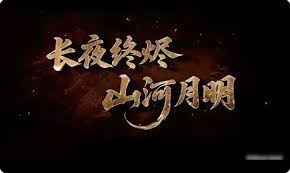
On the evening of February 14, 2026, Henan Television's Spring Festival Gala, themed "Galloping Hooves Rising with the Tide," was meant to be a visual feast blending traditional Chinese aesthetics with technology. The program "The Long Night's Last Ember" in particular was set against the backdrop of Bianjing (Kaifeng) in the Northern Song dynasty, combining traditional-style battle armor, the intangible-heritage art of "striking iron flowers," and fire-blade elements. Dancer Zhang Aoyue transformed into a "wanderer through time," and against declarations like "as the long night burns to its last ember, the mountains and rivers shine again under the moon" and lines calling on "generals to rise up and reclaim our homeland," the performance sought to use art to awaken the audience's memory of, and passion for, traditional Chinese civilization. However, about an hour into the live broadcast, it was suddenly cut off and pulled from every platform. Officials offered only the vague excuse of "force majeure," with no formal explanation to this day.
On the surface, the incident might be chalked up to a technical glitch or scheduling error, but the deeper cause points to the CCP's extreme sensitivity to, and fear of, ideological deviation. The title "The Long Night's Last Ember" itself carries the implication that "the long darkness will eventually burn itself out" — in the current context of upheaval at the top and instability within the military, this could easily be read as a veiled attack on the current regime. Even more direct was the line calling on "generals to rise up and reclaim our homeland," which strikes squarely at the sore point of a wavering military and brushes against the red line of "inciting subversion."
The most fatal blow, however, came from the program's heavy promotion of "divinely-inspired culture" — celestial maidens scattering flowers, awakening deities, gods descending to earth, and recreations of the murals of the Yongle Palace — elements that fundamentally clash with the Chinese Communist Party's atheism and materialist view of history. Since its founding, the CCP has systematically destroyed the roots of this divinely-inspired culture: in the Mao era it tore down temples and forced monks and Taoist priests to return to secular life; in the Jiang era it launched a nationwide persecution of Falun Gong; in the Xi era it escalated the "battle for souls" — tearing down crosses, banning underground churches, and forcing Party branches into temples and monasteries — treating every independent faith as a threat. The Party has placed itself in the position of "god on earth," and any cultural expression pointing to a higher heavenly order, to karma, or to the idea that good and evil are repaid, is treated as subversive to the legitimacy of its rule.
Another key trigger behind this broadcast cutoff was that many viewers openly said that the Henan Gala's programs — especially "The Long Night's Last Ember" and "Yongle Eternal Night" — closely imitated, in visual style, ethereal imagery, and mythological narrative, the overseas dance company Shen Yun. Shen Yun, a world-renowned classical Chinese dance company, has made it its mission to revive authentic, divinely-inspired traditional Chinese culture; its performances are deeply moving, imbued with vitality and virtue, and it has long been regarded by the CCP as public cultural enemy number one — one whose broadcast, imitation or resemblance within China is strictly forbidden. Although the Henan Gala tried to "borrow" a similar style through AI-generated virtual scenes and post-production effects, it came across as merely superficial imitation, lacking any genuine moral substance. Internet users pointed out directly: "Imitating Shen Yun's style is committing a grave taboo," and "Only Dafa [Falun Gong] can perform this kind of art in the future — Dafa is the true representative of traditional Chinese culture."
This "imitation" itself became a high-voltage wire: unintentionally, it brought divinely-inspired culture in the Shen Yun style onto a provincial gala platform and into mass public view, awakening people's memories of a lost tradition. What the CCP fears most is not a single gala performance, but the popular awakening that such a performance could ignite — the realization that the Chinese people once had a civilizational compass older and more sacred than the Party; that morality is not decreed by the Party but ordained by Heaven; that the idea of karmic retribution for good and evil is not "feudal superstition" but a universal law of Heaven. Once this set of values is revived, it becomes a mirror that reveals demons for what they are, exposing who is truly responsible for the collapse of morality and order in China.
From the mass reporting campaign, to the emergency cutoff, to the wholesale erasure across the internet, the Henan Gala broadcast-cutting incident exposes the CCP's profound insecurity beneath its slogan of "cultural confidence." It fears divinely-inspired culture; it fears the prophecy embedded in "The Long Night's Last Ember"; it fears anything that might make the public realize that "the mountains and rivers will shine under the moon" once again. More ironic still, it even fears the very thing it tried to copy — because what it copied is precisely the authentic representative of traditional Chinese culture that it most wants to destroy, yet cannot.
The February 14 broadcast-cutting scandal at Henan TV was no accident — it was yet another collective panic by the CCP over its own illegitimacy and cultural emptiness. This is the whole truth behind the sudden axing of the Henan Spring Festival Gala.