Recently, I came across an article titled "How Much Damage Has Xi Jinping Done?" It cited a list compiled by a netizen enumerating "30 harms" that would supposedly continue as long as he (Xi) remains in power — a truly painful reckoning. I have no wish to judge right and wrong here, but I do want to ask one question: if Xi stepped down today, would the CCP get better? My answer is: no.
In truth, taken purely as an individual, if Xi were separated from the CCP, he would be an entirely ordinary person, incapable of posing any great "harm" to China or the world — let alone "30 harms." In reality, it was the CCP that chose Xi, and Xi who made use of the CCP, and together they produced today's crisis in China's domestic and foreign affairs.
In the 14 years since Xi came to power, he has, at the political level, accomplished at least six things. Each of these six things was made possible by the CCP choosing Xi and Xi exploiting the CCP. And each of these six things is accelerating the CCP's march toward self-destruction.
First: a massive purge of the military has left generals and marshals alike in mortal danger.
Ever since Xi took power, he has continued to purge the military. By 2026, Xi's military purge has reached unprecedented scale.
By my preliminary count, as of February 4, 2026, the number of generals Xi has investigated and purged may be as high as 415. Since the CCP's 20th Party Congress in 2022, the number of generals purged by Xi may be as high as 142.
On February 26, 2026, the Standing Committee of the CCP's National People's Congress announced that nine more generals had been stripped of their NPC deputy status, including five full generals, one lieutenant general, and three major generals. Three additional full generals were absent from that day's Standing Committee session.
In Xi's 14 years in power, he has not fought a single war, yet the number of generals he has purged exceeds the combined total of generals who fell in civil war, foreign war, and the Cultural Revolution since the CCP founded its armed forces in 1927.
Of the active-duty full generals Xi himself promoted, only four remain: Zhang Shengmin, vice chairman of the Central Military Commission; Dong Jun, minister of national defense; Han Shengyan, commander of the Central Theater Command; and Yang Zhibin, commander of the Eastern Theater Command.
Zhang Shengmin, the only full general among the Central Military Commission's seven members, is not trusted by Xi — Xi was already secretly investigating him as early as 2023, and he could be purged at any moment. Dong Jun was recommended to Xi by Miao Hua, the former director of the CMC's Political Work Department, who has since fallen. Because of his ties to Miao Hua, Dong Jun has still not been promoted to CMC member or state councilor, and is reportedly under a cloud as a "problem official," still under observation. Han Shengyan and Yang Zhibin were only promoted from lieutenant general to full general last December 22. Both had long been sidelined figures, and were only able to be promoted now because full generals have become such a scarce commodity.
Xi's massive military purge has gutted the Central Military Commission, the military's supreme command body — of its seven members, only two remain (Xi Jinping and Zhang Shengmin), neither of whom has combat experience or comes from a background of commanding troops. At the same time, Xi has all but emptied out the ranks of active-duty full generals. Of the four who remain, not one is someone Xi genuinely trusts.
The consequence of Xi's purge of the military is this: Xi has no general he can trust beneath him, and perhaps no general trusts Xi either. Generals and their supreme commander regard each other with suspicion; everyone feels endangered — including Xi himself.
Second: corruption in official appointments has reached an absurdity without precedent, past or present.
The foreign minister is the CCP's spokesman on the international stage. Qin Gang, whom Xi personally, and with extraordinary speed, promoted to the post — the youngest top Party and state leader in CCP history — "disappeared" just half a year into his term, and was later removed from office, becoming the shortest-serving foreign minister in the 76-year history of CCP rule.
The defense minister is the international face of the CCP's armed forces. Li Shangfu — a CMC member, state councilor, and defense minister — was placed under investigation less than half a year after taking office, and was later dismissed, expelled from the Party and the military, stripped of his rank of full general, and referred for prosecution, becoming the shortest-serving defense minister in the CCP's 76-year history.
The Rocket Force is the elite unit Xi personally created to enable a forced "reunification" with Taiwan, deter the United States, and contend for global supremacy — the strategic branch responsible for launching medium-range, long-range, and intercontinental missiles capable of carrying nuclear warheads. Selecting its commander should in theory demand the utmost caution. Yet all four commanders of the Rocket Force personally chosen by Xi — Wei Fenghe, Zhou Yaning, Li Yuchao, and Wang Houbin — turned out to be "seriously corrupt elements," and all were investigated and prosecuted.
The director of the CMC's Political Work Department is the chief architect of Xi's program of "political army-building," and the mastermind behind Xi's selection of senior military officers across the entire armed forces. Miao Hua, whom Xi promoted to this post and who was dubbed Xi's "second-most trusted confidant in the military," nevertheless was branded a "seriously corrupt element" for "collapse of faith and betrayal of loyalty" and for "seriously undermining the principle of the Party commanding the gun and the system of CMC chairman responsibility," and was stripped of his post and prosecuted.
He Weidong, a member of the CCP Politburo and vice chairman of the Central Military Commission, was Xi's personally chosen, fast-tracked "most trusted confidant in the military." Just two years and four-odd months into his tenure, he too was branded a "seriously corrupt element" for "collapse of faith and betrayal of loyalty" and "seriously undermining the principle of the Party commanding the gun and the system of CMC chairman responsibility," and was stripped of his post and prosecuted.
Zhang Youxia, a CCP Politburo member and vice chairman of the Central Military Commission, was chosen by Xi before the 20th Party Congress under the banner of "putting political standards first and strictly vetting political integrity," to serve as the military's deputy commander-in-chief, second only to Xi himself. Just three years and three months after that congress, however, Zhang was found to be a "seriously corrupt element" who had "seriously trampled on and undermined the CMC chairman responsibility system, seriously abetted problems that harm the Party's absolute leadership over the military and endanger the foundations of Party rule, seriously damaged the image and authority of the CMC leadership, and seriously undercut the political and ideological foundations of unity among officers and soldiers across the armed forces" — and was placed under investigation.
Throughout history, anywhere in the world, has any wise and capable ruler ever chosen and used people this way? Absolutely not.
Xi himself has said: "Corruption in official appointments is the greatest corruption of all." By that standard, who is the CCP's number-one culprit in the corruption of official appointments?
Third: personal dictatorship has reached an absolute extreme.
During the ultra-leftist decade of the Cultural Revolution, Mao Zedong's personal dictatorship reached its absolute peak — and that was also when Mao's turmoil brought China to the brink of collapse.
In the course of his anti-corruption campaign against "tigers," Xi Jinping, through wave after wave of purges, became the "core" of the Party — yet even that was not enough. He sought to have "one man alone" decide everything: personnel appointments, domestic and foreign affairs, and all major questions must be settled by Xi's word alone.
To this end, in theory, Xi promoted the "Two Establishments" (establishing Xi's core position within the Party Central Committee and the Party as a whole, and establishing the guiding status of Xi Jinping Thought), the "Two Upholds" (upholding Xi's core position within the Party Central Committee and the Party as a whole; upholding the authority and centralized, unified leadership of the Party Central Committee), and the "Four Consciousnesses" (political consciousness, consciousness of the overall situation, consciousness of the core, and consciousness of alignment). Stripped of jargon, these "Two Establishments, Two Upholds, and Four Consciousnesses" simply mean: the Party, the government, the military, academia, the people — everything, everywhere — must be decided by Xi and Xi alone.
Institutionally, Xi introduced a system requiring the very top officials to submit written work reports directly to him. The CCP Party Constitution states that the general secretary's duty is to convene meetings of the Politburo and its Standing Committee and preside over the work of the Secretariat. But after the 19th Party Congress, Xi introduced a new rule: every top-level official below him — Politburo members, Secretariat members, Party group members of the NPC Standing Committee, the State Council, and the CPPCC, as well as the Party secretaries of the Supreme Court and Supreme Procuratorate — must submit a written work report to Xi every year.
This practice began in 2018 and continues to this day. It places Xi above every other top-level official beneath him. Xi is not formally an "emperor," but functions as one in all but name — and this has opened a green light for Xi's unchecked exercise of power.
By the time of the CCP's 20th Party Congress, when Xi secured a third term, he had reached the summit of personal dictatorship. The most glaring demonstration of this came at the congress's closing session, when, in full view of foreign media cameras, Xi ordered the forcible removal from the hall of former top Party, state, and military leader Hu Jintao — who had already been retired for ten years, was 80 years old, had once given Xi crucial help, and posed no threat whatsoever to Xi's power.
Before rising to power, Xi was of average intelligence and had an unremarkable record of achievement; the only thing that made him stand out was being the son of CCP elder Xi Zhongxun. Yet in just ten short years after taking power, he was transformed into the supposed embodiment of the highest wisdom of the entire Party, military, and nation. With the CCP's personnel decisions, investigations and prosecutions, domestic and foreign policy, and all matters of state now decided by Xi alone, the results can well be imagined.
Fourth: the succession problem remains unsolved, guaranteeing a major crisis whenever power changes hands.
In the nearly 105 years since its founding, the CCP has never resolved the problem of transferring supreme power lawfully, in an orderly and stable manner.
Before Xi came to power, though the succession problem remained fundamentally unsolved, the CCP's top leadership would still deliberately choose two people — one destined to be premier, one to be general secretary — producing pairings such as Jiang Zemin and Zhu Rongji, Hu Jintao and Wen Jiabao, and Xi Jinping and Li Keqiang. During those periods, even though internal Party infighting was fierce and often ruthless, the transfer of supreme power remained at least somewhat predictable.
But in the 14 years since Xi took power, he has never designated a successor. At the CCP's 18th Party Congress, Hu Chunhua and Sun Zhengcai, both born in 1963, were "elected" to the Politburo. By past convention, either might have been in line to become premier or general secretary. But before the 19th Party Congress in 2017, Xi had Sun Zhengcai arrested on corruption charges; Sun was later sentenced to life in prison. Hu Chunhua made it into the Politburo at the 19th Congress, but was excluded from it at the 20th Congress and shunted off to the largely ceremonial Chinese People's Political Consultative Conference.
In the run-up to the 20th Party Congress, observers at home and abroad speculated endlessly about who Xi's successor might be. In the end, the consensus was: Xi's successor is Xi himself.
Since the 20th Party Congress, the question of Xi's successor has remained entirely unresolved. Should Xi suddenly die of illness, or suddenly meet with misfortune, the CCP's political order would immediately plunge into a grave crisis of power struggle.
Fifth: the constitutional amendment passed with ease, opening the door to endless calamity through lifetime tenure.
Starting from his second term, Xi turned "a winning hand into a losing one." Why? There are many reasons, but one glaring misstep was amending the constitution's term limits on the state presidency.
When the CCP revised its constitution in 1982, in response to the problem of lifetime tenure for leading cadres, it imposed a limit on the presidency, stipulating that no one could serve more than two consecutive terms.
Not long after the 19th Party Congress concluded in 2017, Xi moved to abolish the constitutional term limit on the presidency, paving the way for him to rule for life.
Lifetime tenure for cadres was one of the important causes that drove the CCP into the decade-long catastrophe of the Cultural Revolution.
That the CCP's top leader should remain in office for life carries both an inevitability and a real terror. The inevitability lies in the fact that the CCP believes in a philosophy of perpetual struggle: whoever occupies the top position got there through unending struggle. To keep that position, he must keep struggling. Toppling one group creates a new set of enemies; toppling the next group creates still more; the more enemies he makes, the less secure he becomes; the less secure he becomes, the more he must keep struggling. In the end, he struggles himself into total isolation, and drags the nation into catastrophe.
Back then, Mao Zedong was trapped in this vicious cycle and could not extricate himself; today, Xi Jinping is no different.
Sixth: silencing all dissent inevitably produces one disastrous misstep after another.
During the decade-long Cultural Revolution, the CCP enforced total uniformity of public opinion, until it reached the point where — in the words of the old poem — "all voices fell silent, a truly lamentable state."
After the Cultural Revolution ended, Deng Xiaoping's reform and opening-up brought some easing of control over public opinion; in the 1980s there was a period when people were allowed, within certain limits, to speak the truth.
But since Xi came to power, control over public discourse has grown tighter and tighter. Anyone who dares voice a different opinion, an objection, or even a somewhat pointed view becomes a target of severe crackdown. Three prominent examples stand out.
Ren Zhiqiang — a 69-year-old "princeling" who had been retired for six years, a well-known entrepreneur, and an "old friend" of Wang Qishan, former Politburo Standing Committee member and head of the Central Commission for Discipline Inspection — wrote an article criticizing Xi after the outbreak of the pandemic in 2020, which someone posted to an overseas website. Once word reached China, disaster fell swiftly on Ren: he was detained and investigated, expelled from the Party, arrested and tried, charged with four crimes — embezzlement, bribery, misappropriation of public funds, and abuse of power as an employee of a state-owned company — and sentenced to a heavy 18 years.
I have read Ren Zhiqiang's article closely. Aside from a few sharply worded sentences, his basic views were grounded in reality — the words of a Chinese citizen with a conscience, worried for his country and its people, speaking hard truths in a year of great calamity that served the interests of both the state and the people. But rather than heed these hard truths, Xi instead handed Ren a harsh sentence.
Xu Zhangrun — a professor and doctoral supervisor at Tsinghua University Law School, once named one of the "Ten Outstanding Young Jurists in China" — wrote several articles criticizing Xi, likewise out of concern for his country and its people, and as a result was suspended and put under investigation. He was ordered to stop teaching, halt all research activities, stop admitting students, and was stripped of every post he held. He was later arrested, detained, and subjected to humiliation on trumped-up charges of "soliciting prostitution"; after his release, Tsinghua dismissed him from his position.
Xu Zhiyong, a doctor of law who graduated from Peking University, likewise out of concern for his country and its people, wrote an open letter to Xi. It read: "Seven years ago, I wrote an open letter hoping you would lead China toward democratic constitutionalism. That was once the hope of the nation. You threw me in prison for four years. Now your people are searching everywhere for me, wanting to throw me back in prison." "But I still hold good will — good will toward everyone. I don't believe you are an evil man, only that you are not wise enough. So I urge you once more, as many others hope as well: Mr. Xi Jinping, please step down." As a result, Xu Zhiyong was charged with "subversion of state power" and given a heavy sentence of 14 years.
Given how Xi has treated Ren Zhiqiang, Xu Zhangrun, and Xu Zhiyong, who would still dare speak the truth to him?
China today has once again returned to an era where, as the old poem put it, "all voices have fallen silent — a truly lamentable state."
Everything Xi hears and sees is falsehood and fabrication. When decisions are made on a foundation of lies and false appearances, how could they not go badly, badly wrong?
Conclusion
In my view, the CCP's problems today are not Xi Jinping's problems alone, but the problems of the CCP as a whole — the inevitable culmination of everything accumulated across the eras of Mao Zedong, Deng Xiaoping, Jiang Zemin, and Xi Jinping.
What is the fundamental problem with the CCP as a whole? At its core, it is killing. During Mao's 27 years in power, his ultra-leftist policies caused the unnatural deaths of 80 million Chinese people; Deng Xiaoping orchestrated the Tiananmen Massacre of June Fourth; Jiang Zemin killed through the mass live harvesting of organs from Falun Gong practitioners. Mao, Deng, and Jiang each left Xi one of "three mountains" weighing him down.
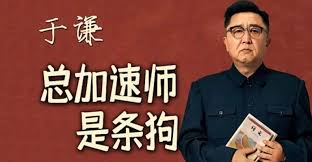
Crushed under these "three mountains," Xi simply cannot lift his head or see the way forward — all he can do is grit his teeth and keep thrashing about. How could China's domestic and foreign affairs possibly turn out well under such conditions? This year, foreign media gave Xi a new nickname: "the Destroyer." Before that, he already had the nickname "Chief Accelerationist." Some have combined the two, calling Xi "the Chief Accelerationist Who Is Destroying the CCP."
Perhaps "destroying the CCP" is simply Xi's destiny — and no one else could have done it quite as well.