Although this year's anniversary doesn't fall on a round number, the approach of the 37th anniversary of "June Fourth" still unsettles Beijing. No matter how things change, the one and only tried-and-true method for dispelling its own fear remains making the people within its borders afraid.
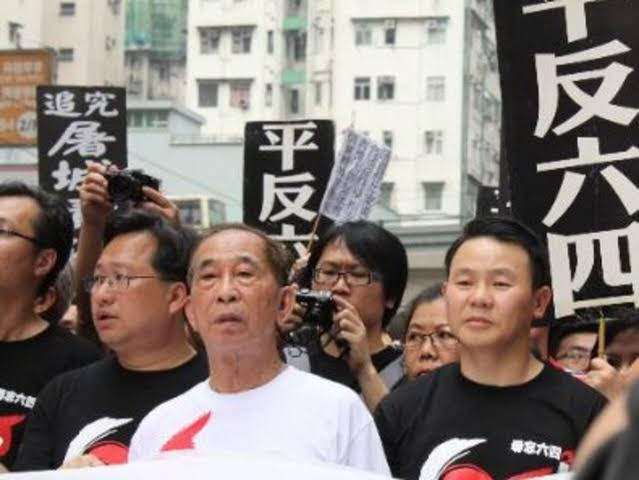
The opposite of fear-driven forced forgetting is the unbroken, wave-after-wave defiance of those undeterred by repression: since 1989, Hong Kong's Alliance in Support of Patriotic Democratic Movements of China has held the world's largest June Fourth candlelight vigil every year at Victoria Park; as recently as 2019, it still drew 180,000 participants, before Hong Kong police banned the gathering. In 2020, Hong Kong implemented the National Security Law, and the Alliance was subsequently forced to disband. Its leaders at the time — Chow Hang-tung, Lee Cheuk-yan, and Albert Ho — were arrested one after another and charged with inciting subversion of state power.
On the evening of May 30, 2026, the Toronto Alliance held a "Concert for Freedom and Candlelight Vigil" at Mel Lastman Square in North York, commemorating the 37th anniversary of the Tiananmen Massacre, drawing several hundred participants of various ethnic backgrounds.
Ahead of the 37th anniversary of the June Fourth incident, the mainland-operated games World of Tanks and World of Warships each announced that they would shut down their in-game chat systems from June 2 to June 6, and suspend the ability to change nicknames, clan names, and related information. The announcements did not state that the arrangements were related to the sensitive date, but the shutdown period covers June 4.
This seemingly inexplicable announcement serves as a reminder to people: June Fourth is approaching, and officials are worried that players at home and abroad will post images of the "Tank Man."
One person from mainland China told overseas media: "Every year around the anniversary of June Fourth, online games, WeChat, and Weibo restrict military-related images, especially pictures of tanks, as well as images of Tiananmen Square. Young people in their twenties originally had no idea what June Fourth was, but once the authorities ban it, they figure out exactly what it's about."
It isn't just online games that get restricted — many mainland users also find themselves unable to change their profile pictures. One person complained: "Today I couldn't even change my WeChat or Xiaohongshu profile picture. The censors and state security agents get terrified the moment they see a June Fourth image."
A fearful, hostile reaction to June Fourth commemoration has also occurred overseas: the June Fourth Memorial Museum, based in California, issued a statement on Monday, June 1, condemning the perpetrators — and whoever directed them — who illegally broke in and vandalized the museum with spray paint the day before, calling it the latest instance of "transnational repression" targeting the overseas democracy movement.
Wang Dan, convener of the June Fourth Memorial Museum and a leader of the Tiananmen student movement, told Voice of America (VOA): "This is a very clear act of intimidation. I think its main purpose is to threaten and intimidate — hoping you won't hold a high-profile commemoration of June Fourth."
Wang Dan further noted that from the vandalism of the Liberty Sculpture Park in Los Angeles in recent years, to attacks on dissidents overseas, to this latest vandalism of the memorial museum, these events show a similar pattern indicating this is not an isolated incident, but reflects a consistent underlying strategy. "The one entity in this world that least wants us to commemorate June Fourth is the CCP. But this kind of intimidation and threats will never actually work. We will not bow to this intimidation and these threats."
In recent years, Beijing's "transnational repression" — extending its mechanisms of censorship, surveillance, and intimidation beyond its own borders — has become an increasingly prominent security concern for Western countries.
On the very day the vandalism occurred, the June Fourth Memorial Museum's originally scheduled second annual "China Forum" went ahead as planned. The discussion, themed "Cross-Era Cooperation in Political Opposition Movements," filled every seat, with a line of supporters stretching out to the museum's entrance.
The June Fourth Memorial Museum was founded in Hong Kong in 2014 to preserve the memory of the 1989 pro-democracy protests and massacre at Tiananmen Square; it was forced to close in 2021, reopened in New York two years later, and relocated to Los Angeles in 2025.
On the occasion of the 37th anniversary of the Tiananmen Massacre, Beijing Spring magazine, the Federation for a Democratic China, and the National Committee of the China Democracy Party jointly held a "Symposium Commemorating the 37th Anniversary of June Fourth, the 60th Anniversary of the Cultural Revolution, and the International Situation" on June 1 in Flushing, New York. Numerous leaders of the democracy movement, eyewitnesses of June Fourth, scholars, lawyers, veteran journalists, and political commentators gathered to review the lessons of China's political development and democracy movement since 1989 and to look ahead to future prospects.
Participants pointed out that although 60 years have passed since the Cultural Revolution and 37 years since June Fourth, the fundamental nature of CCP totalitarian rule has never changed. June Fourth is not only a blood debt the CCP owes, but also a trampling of the conscience of both the Chinese people and the world. As social contradictions in China continue to accumulate, the demand for political change keeps growing, and overseas democratic forces should prepare for a possible future political transformation.
Hu Ping, honorary chief editor of Beijing Spring, said June Fourth has still not become history. He said: "That murderous regime still sits high on its throne; the dead have never received justice; freedom fighters remain either imprisoned or exiled abroad. June Fourth is not the past perfect tense — it is the present continuous."
Zhou Fengsuo, a leader of the June Fourth student movement, said the 1989 pro-democracy movement was the first time Chinese people gathered on a mass scale to demand democracy, resist tyranny, and fight for freedom.
He believes that the White Paper Movement among young people in mainland China in recent years proves that a force of resistance still exists within Chinese society, and shows that Chinese people at home and abroad can work in tandem — "overseas Chinese raise their voices online, while people inside China take action on the ground."
Zhou Fengsuo noted that, with the forces of resistance scattered, social media has become an essential tool for building consensus and driving action.
He said: "The internet and social media are today's equivalent of Tiananmen Square in 1989. This year, the scale of online commemoration of June Fourth was much larger than in past years, and new historical materials have also been unearthed and circulated."