
Twenty years ago, when David Kilgour, Canada's former Secretary of State for Asia-Pacific, and human-rights lawyer David Matas first published their Independent Investigation Into Allegations of Organ Harvesting from Falun Gong Practitioners in China (Bloody Harvest), they described forced organ harvesting as “an evil that has never before existed on this planet.”
At the time, many Western politicians and mainstream media outlets hesitated and refused to believe it, since forced organ harvesting seemed to defy all common sense. Twenty-seven years later, as mounting evidence has broken through the CCP's cover-up and been brought into the light, the global human-rights, medical, and political communities have finally begun to awaken to this injustice.
The Death of Luo Shuaiyu
At 8:10 a.m. on May 8, 2024, in Changsha, Hunan, Luo Shuaiyu, a graduate student at Xiangya Second Hospital of Central South University, fell to his death from a dormitory building -- less than a month before he was due to complete his master's degree. His research focus in life had been kidney transplantation.
His family was initially told by the hospital that this was a suicide. But after Luo Shuaiyu's parents managed to recover the data that had been wiped from their son's computer and phone, what they found instead was more than 1,000 pieces of evidence pointing to wrongdoing -- audio recordings, transfer records, and chat screenshots -- totaling 11,119 printed pages and weighing 16 kilograms, all pointing to suspected illegal organ trafficking at Xiangya Second Hospital.
Luo Shuaiyu's sudden death, and the evidence he left behind, suggest he may have been a whistleblower -- and his tragic fate may point to an even larger, systemic chain of interests. (Weibo image / composite)
In one recording released by his family, a hospital staff member instructed Luo Shuaiyu to “get out more” to find children aged 3 to 9 to serve as “donors,” openly referring to these children as “donors” without any hesitation. Luo Shuaiyu's father later told media that officials at Xiangya Second Hospital had approached the family directly, offering 15 million yuan to buy their silence -- an offer the family refused.
The Testimony of a Former Military Doctor
In 1994, while doing his residency at the Shenyang Army General Hospital, Zheng Zhi was suddenly summoned by the military region, along with several other military doctors and a head nurse, to carry out a “secret military mission” -- with orders not to call and notify their families. The group traveled overnight by modified ambulance to a prison near Dalian. The next day, they were taken to a heavily guarded open area, where they found a young man whose hands, feet, and neck were all bound with thin rope. After the head nurse cut open and disinfected his clothing, the military doctor, without administering any anesthesia at all, cut a large incision starting below the sternum and running down to the navel, and the man's intestines spilled out instantly. After removing both kidneys, a soldier standing opposite ordered Zheng Zhi to personally remove one of the victim's eyeballs -- Zheng took the hemostatic forceps but simply could not bring himself to do it, because “his eyes were staring straight at me, and his eyelids were still moving.” In the end, another military doctor stepped in to finish the job.
On July 31, 2023, Zheng Zhi gave an exclusive interview to The Epoch Times, publicly exposing the crime of forced organ harvesting. (Video screenshot)
This experience completely broke him. In 2002, while accompanying a military-region leader suffering from kidney disease for a checkup, he personally overheard an officer in the hallway say: “Find him a good-quality, fresh one -- from a Falun Gong practitioner (kidney).” This was the first time he realized that Falun Gong practitioners were specifically targeted for forced organ harvesting. In 2005, a close associate of a CCP Politburo Standing Committee member told him that the back garden basement of the Hubei Provincial Public Security Department was packed full of detained Falun Gong practitioners, including minors.
In 2007, Zheng Zhi fled to Canada, where he lived under a hidden identity for 16 years. It was not until 2023, when he learned of the exposed dying testimony of Harbin Falun Gong practitioner Zhang Xiuqin regarding forced organ harvesting -- given in 2019 -- that he was deeply moved and decided to come forward publicly to testify under his real identity. Since then, he has traveled repeatedly to Taiwan's Legislative Yuan and spoken at events elsewhere, calling for the passage of a law to combat and prevent forced organ harvesting, and has broken down in tears on multiple occasions after screenings, recounting his experience.
Latest Report: Practitioners Not Even in Detention Are Also Targets of Forced Organ Harvesting
The death of Luo Shuaiyu and the crimes exposed by Zheng Zhi are merely the tip of the iceberg of an enormous criminal system of forced organ harvesting.
In April this year, US Congressman Chris Smith, co-chair of the Congressional-Executive Commission on China (CECC), testified at a congressional hearing titled “A Market Built on Victims: Stopping Illegal Organ Trafficking in China and Beyond,” stating that the CCP regime “dehumanizes and detains large groups of healthy people, subjecting them to blood typing, tissue typing, and organ scanning to build a database. Whenever someone needs a transplant -- whether a Chinese elite or a foreign transplant tourist -- a match can be found, and the victim is killed on demand.” The same hearing record indicated that a recent investigation has identified 113 facilities across China conducting this kind of health screening, with the most recent case occurring in 2024.
On May 14, 2026, the US Congressional-Executive Commission on China (CECC) held a hearing focused on the CCP's crimes of forced organ harvesting. CECC co-chair and veteran congressman Chris Smith speaking at the hearing. (Li Chen/The Epoch Times)
He testified that the average age of forced organ-harvesting victims is just 28, with victims drawn overwhelmingly from Falun Gong practitioners and Uyghurs.
In May this year, the Falun Dafa Information Center submitted formal written testimony to the CECC stating: “Between March and June 2023, some local practitioners in Anhui were summoned by local police for blood tests and physical examinations...” The testimony noted that such blood-testing and physical-examination cases are distributed extremely widely across both time and geography, corroborating testimony the center submitted to the CECC in 2024 -- evidence, it says, of a long-standing, state-level policy.
A Final Verdict Beyond Doubt
On June 17, 2019, the independent people's tribunal known as the China Tribunal issued its final judgment in London, chaired by Sir Geoffrey Nice QC, the British barrister who had previously led the war-crimes prosecution of Slobodan Milošević. The judgment stated that forced organ harvesting “has been committed for years throughout China on a significant scale,” and that Falun Gong practitioners have been “a -- and probably the main -- source” of organ supply. The judgment further noted that the tribunal “had no evidence that the significant infrastructure associated with China's transplant industry had been dismantled,” and, absent any other reasonable explanation, concluded that forced organ harvesting continues to this day.
The “people's tribunal” delivered its verdict in London on June 17, 2019, ruling that forced organ harvesting from prisoners of conscience in China continues, with Falun Gong practitioners as the primary source of organ supply. (Guanqi/The Epoch Times)
The evidence underpinning this judgment forms an interlocking chain. The judgment recorded that the waiting times promised by numerous Chinese transplant hospitals and doctors are far shorter than anything achievable in any country relying on a voluntary donation system -- in the free world, patients typically wait years to be matched with a suitable organ, yet numerous Chinese transplant hospitals have openly advertised waiting times of just one to two weeks, with another organ available within a week if the first attempt fails. The tribunal ultimately concluded that such conduct constitutes a “crime against humanity” as defined under Article 7 of the Rome Statute.
A Bloody Industrial Chain Backed by the Machinery of the State
This crime could not have operated for so long without the cooperation of the entire state apparatus. Investigations have found that the vast majority of China's more than 150 military hospitals conduct organ transplant operations, with astonishing volume, and are identified as a primary force behind the forced harvesting of organs from Falun Gong practitioners.
Without exception, these hospitals all report a surge in organ transplant cases beginning in the year 2000: large-scale infrastructure construction, doctor training programs, and impressive surgical volumes were all first publicized starting at that time -- precisely when the CCP's persecution of Falun Gong had just begun.
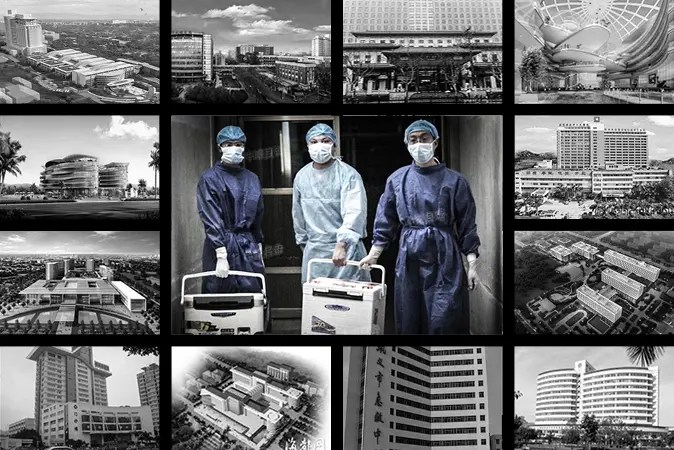
In 2006, Tianjin First Central Hospital built a 17-story organ transplant center. Pictured is Tianjin First Central Hospital. (Hospital file photo)
David Kilgour and David Matas concluded in their report Bloody Harvest/The Slaughter: An Update that, once Falun Gong practitioners became available as a source of organ donors, China's organ transplant industry was created almost overnight.
The three authors of Bloody Harvest/The Slaughter: An Update (from left) David Kilgour, David Matas, and Ethan Gutmann. (Simon Gross/Epoch Times)
As the transplant center affiliated with China Medical University in Shenyang itself stated on its website, being able to complete such a high volume of transplant surgeries would be impossible without the support of the CCP regime; the center further noted that the CCP's “Supreme People's Court, Supreme People's Procuratorate, Ministry of Public Security, Ministry of Justice, Ministry of Health, and Ministry of Civil Affairs jointly issued a relevant law on October 9, 1984, establishing the provision of organs as an act supported by the government -- something unique in the entire world.”
Conclusion
Twenty-seven years have now passed since the persecution of Falun Gong began in 1999. The ordinary believers who were once thrown into forced-labor camps, subjected to systematic physical examinations, and secretly marked as “qualified” or not, have finally seen their ordeal move, step by step, out of a hidden cover-up and into the courtrooms of London and the halls of Congress in Washington.
On March 5 this year, US Senators Cruz and Merkley introduced the Falun Gong and Organ Harvesting Victims Protection Act (S.4009), aimed at imposing sanctions on individuals and entities involved in or assisting the CCP's forced organ harvesting; on June 17 this year, the bill passed review by the Senate Foreign Relations Committee, with more than 30 organizations jointly signing a letter urging the Senate to schedule it for a vote as soon as possible.
This long road to justice is far from over -- but it is no longer being walked in silence.