Pastor Bob Fu, president of ChinaAid, an organization that has been very active in advocating for religious freedom in China in recent years, says that religious persecution under the CCP has now reached its worst level in forty years. From Xi Jinping's rise to power in 2012 through 2021, the CCP can fairly be said to have launched a war on faith.
He said: 'One tactic used for years has been to brand things as "cults" — meaning that any religious belief unwilling to conform to CCP ideology, or that refuses to firmly subordinate its faith to the CCP system, gets labeled a cult. Now a new round of crackdowns is being carried out nationwide against congregations known as the "Local Churches," which are regarded as orthodox everywhere else in the world. This is a new round of religious persecution carried out under the pretext of combating cults.'
The Local Churches fall broadly within China's house-church movement, but differ from house churches in the traditional sense, and have no connection at all to the officially sanctioned 'Three-Self' churches. Because of particular historical circumstances and the authorities' longstanding heavy-handed pressure, the Local Churches operate in near-total secrecy, so that even when they are persecuted, the outside world rarely learns of it.
The Local Churches are a Christian movement founded in 1921 by the Christian leaders Watchman Nee and Witness Lee, whose origins and distinctive elements were influenced in part by the English Brethren movement. In China they are also known as 'the Lord's Recovery' and the 'Little Flock.'
In 1983, the CCP designated the Christian 'Shouters' sect, among others, as a cult organization to be suppressed and cracked down upon. In 1995, it further classified the Local Churches — an independent Protestant movement founded and led by Witness Lee — as part of the Shouters. Publications used by the Local Churches, such as the Recovery Version of the Bible and Morning Revival, were likewise designated 'cult' literature. Yet in the United States and other countries where religious freedom is fully protected, the Local Churches have become recognized as an evangelical Christian movement, accepted within mainstream Christianity.
Remolding the Church Through the 'Sinicization' of Christianity
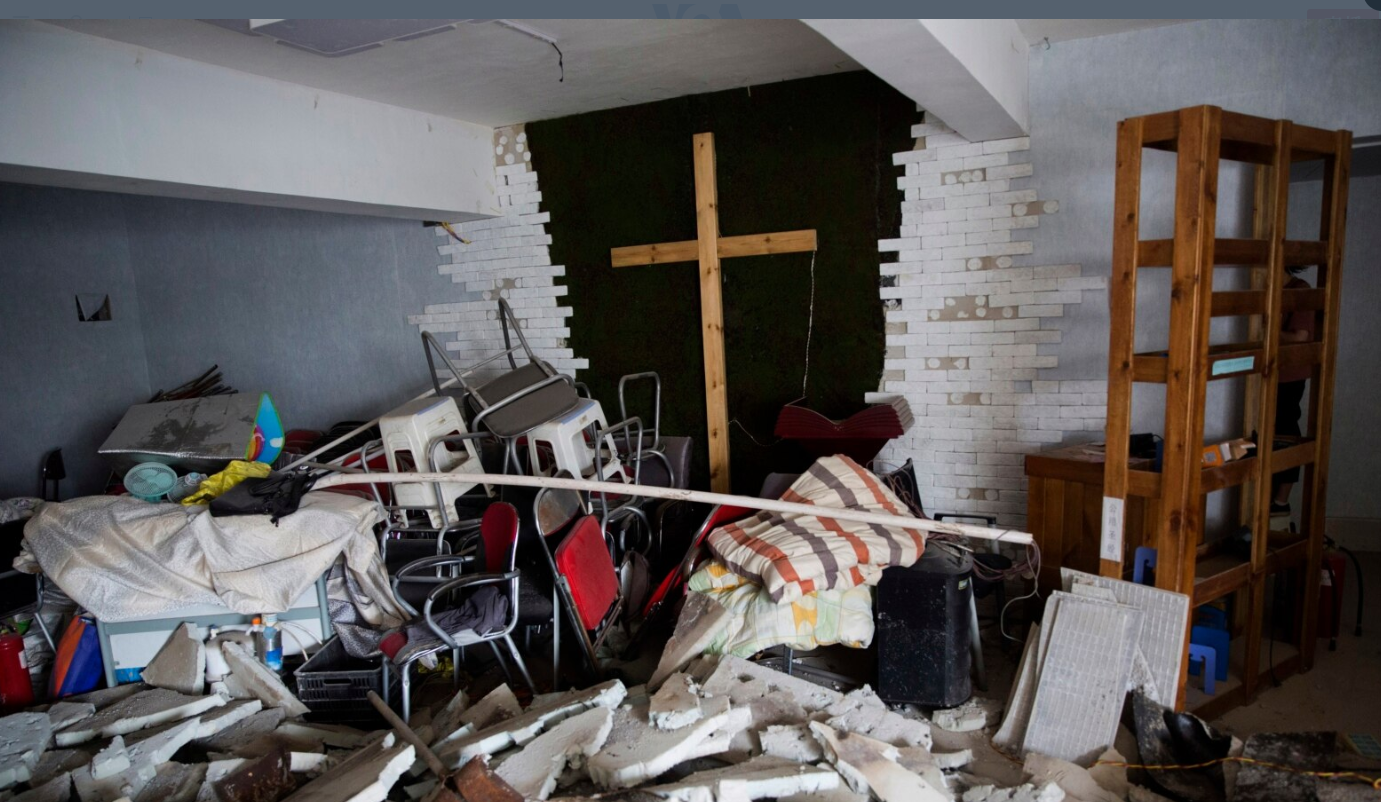
According to a report by the international religious-freedom organization the Association for the Protection of Human Rights and Religious Freedom, after Xi Jinping came to power in 2012 the CCP put forward the policy of 'Sinicizing Christianity' and intensified its crackdown on Christianity and Catholicism — persecuting and shutting down not only Christian house churches and underground churches but also sparing none of the officially sanctioned Three-Self churches. Starting in 2014 in Zhejiang, where Xi Jinping had previously served as provincial Party chief, authorities began tearing down crosses from church rooftops and demolishing many church buildings outright, a campaign that later spread nationwide. According to incomplete statistics, in 2014 and 2015 alone, more than 50 churches were forcibly demolished in Zhejiang and as many as 1,700 crosses were torn down. In Wenzhou, Zhejiang — known as 'China's Jerusalem' — the officially approved Sanjiang Church was demolished by more than a thousand riot police and armed police. It has also been reported that in Henan, at least 7,000 church crosses were forcibly removed in 2018.
The report also states that the newly revised Regulations on Religious Affairs, which took effect on February 1, 2018, allow grassroots-level governments to shut down house churches at will. On March 30 of that year, the CCP's Cyberspace Administration ordered a complete ban on Bible sales, and the Bible was immediately pulled from major online retailers including JD.com, Tmall, Taobao, and Dangdang.
At the same time, house churches unwilling to fall in line with the CCP and refusing to join the officially sanctioned Three-Self movement were shut down across the board. In January 2018, the Golden Lampstand Church, a house church in Fushan, Linfen, Shanxi, was demolished by explosives. On September 9, Zion Church, Beijing's largest house church, was forcibly banned. On October 14, the well-known Rongguili house church in Guangdong was shut down. On December 9, Early Rain Covenant Church in Chengdu, Sichuan, was banned, and its pastor Wang Yi was charged with 'inciting subversion of state power' and later sentenced to nine years in prison; numerous congregants remain in detention to this day.
At the same time, the CCP has continued escalating its control over Three-Self churches as well, closely monitoring the content of their sermons, forcing them to preach CCP policy, and controlling church finances.
A Pastor's Account: The Crackdown Never Stops
Reporters called several Christians from house churches in Beijing hoping to learn about their situation and that of their churches, but all of them said the current climate was tense and sensitive, the pressure too great, and they dared not say much. However, a house-church pastor from one province said that the authorities' crackdown and persecution of house churches has indeed continued to intensify in recent years, and that the 'Sinicization of Christianity' has left churches — especially the officially sanctioned Three-Self churches — neither one thing nor another.
Pastor: 'It's still the same high-pressure policy — if anything it's gotten worse, not better. Especially with July 1st [the CCP's founding anniversary] coming up, there's red-song singing everywhere now.'
Reporter: 'Does your church have to do things like sing red songs?'
Pastor: 'House churches are relatively better off. After all, thank God, in another sense we have a bit more backbone. But by and large, you could say the churches have already fallen.'
Reporter: 'So does your house church face pressure over holding gatherings? Does the government try to stop you from meeting?'
Pastor: 'Yes, that's just routine harassment — it never stops.'
The Association for the Protection of Human Rights and Religious Freedom's report also states that, among the many Christian house churches under persecution, the Church of Almighty God has suffered the most severe and brutal persecution of all. Rough estimates suggest that between 2011 and 2013 alone, more than 380,000 Church of Almighty God Christians were arrested, imprisoned, or sentenced. After 2018, the CCP's crackdown on the Church of Almighty God continued to escalate; according to incomplete statistics, more than 10,000 of its members have been arrested nationwide, over 2,300 of whom remain in detention, with 71 sentenced, and many have even been persecuted to death.
The Association for the Protection of Human Rights and Religious Freedom released a report in April stating that the CCP continues to suppress and persecute the Church of Almighty God; between January and March of this year, at least 750 church members were arrested in Jiangsu, Henan, Sichuan, and other provinces. Police routinely torture Christians in order to extract more information about the church. According to the Church of Almighty God's 2020 annual report, at least 5,500 of its members suffered various forms of torture last year.