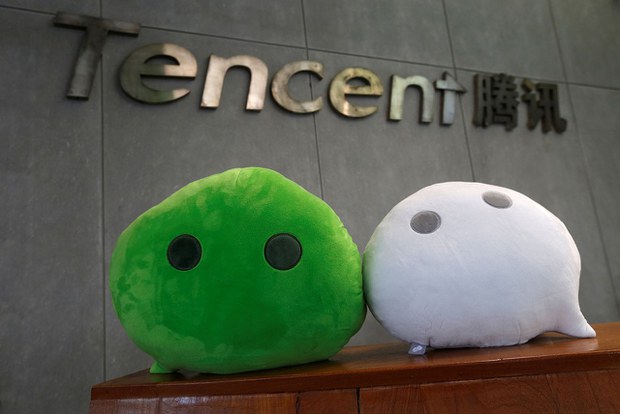
China's WeChat public account "Archaeology Scholars" posted an intriguing message: "The public account 'Northern Dynasties Archaeology' has been reported, and it's simply absurd. The Northern and Southern Dynasties are an important period in our country's history, and 'Northern Dynasties' and 'Southern Dynasties' have been historical terms since ancient times. This account, 'Northern Dynasties Archaeology' (now renamed 'Archaeology Between the Han and Tang'), has long posted purely academic content that violates no rules or laws. Yet just because a few people reported it, WeChat forced it to change its name. Tencent, are you a Pyongyang enterprise?"
Tracing the whole affair, the account named "Northern Dynasties Archaeology" was reported and forced to change its name because the person who reported it mistook "Northern Dynasties" (北朝) for "North Korea" (北朝鮮) archaeology. North Korea — the Democratic People's Republic of Korea, bound to China by a "blood alliance" — under the third generation of the Kim family stands shoulder to shoulder with "West Korea" under the rule of the "Bun Emperor" (Xi Jinping); the two present quite a spectacle, so why would anyone need to dig up their history? On closer comparison, North Korea is actually tougher than West Korea: in North Korea, even official media sometimes publish remarks provoking its "big brother" West Korea, whereas in West Korea, any unfavorable rumor about North Korea circulating among the public gets censored and punished.
Yet the "Northern Dynasties" in this account's name has nothing to do with North Korea. The Northern and Southern Dynasties were a period in Chinese history following the Jin dynasties and preceding the Sui dynasty; the Southern Dynasties comprised the Song, Qi, Liang, and Chen, while the Northern Dynasties comprised the Northern Wei, Eastern Wei, Western Wei, Northern Qi, and Northern Zhou — common knowledge for anyone who received a middle-school history education in China. This renaming incident confirms that Xi Jinping's China is indeed a "West Korea" lurking with danger at every turn, where people are punished for their words and can be found guilty at any moment — a place whose despotism, ignorance, and barbarity are, if anything, worse than North Korea's. Denunciation, ignorance, and "shutting up" are the three keywords running through this incident.
First, in West Korea, denouncing others has become a folk custom and an everyday instinct (even some Chinese emigres abroad who call themselves dissidents relish informing on others). This country is like a Nazi concentration camp: the 1.4 billion people living in it are all slave laborers, and to survive, one does not unite to resist the slave master or heed the national anthem's call to "Arise, ye who refuse to be slaves" — instead, one informs on the slave master's behalf, eliminating those who refuse to be slaves, and even framing people who are actually willing to be slaves with fabricated charges or "silent disloyalty." Just as the "Archaeology Scholars" account argued in defense of "Northern Dynasties Archaeology" — it posted only "purely academic" content and "violated no rules or laws," so why should it be wiped out entirely? That question is beside the point: in West Korea, nothing counts as "purely academic," and whether something "violates no rules or laws" is not for you to decide — it is for the Party to decide.
Second, in West Korea, ignorance is not a disgrace but a badge of honor. As Mao Zedong put it: "I have always said that intellectuals are the most ignorant of all," and "the learning of bourgeois professors should be regarded as bullshit — as nothing, to be despised, scorned, and held in contempt, just as the power and learning of the Anglo-American Western world ought to be despised, scorned, and held in contempt." Xi Jinping, a worthy student of Mao's, is forever mangling characters — a half-literate man in a doctoral cap who treats all civilization, knowledge, and wisdom as mortal enemies, letting anti-intellectualism run rampant across the whole country. The person who filed the report is ignorant, and Tencent's team is equally ignorant. Hence the first line of West Korea's own "Newspeak Dictionary" runs directly counter to Bacon's "knowledge is power": "Knowledge means uselessness; knowledge means reaction." That line ought to be inscribed on West Korea's national emblem.
Third, in West Korea, "shutting up" has become a precondition for staying alive. You may open your mouth — but only to eat. If you want to speak up, and especially to say something unpleasant to hear, you had better keep quiet. Tencent's management, operating on the twin principles of "better to wrongly kill three thousand than let one slip through" and "better too far left than too far right," slapped the reported account with the sweeping charge of "risk of causing confusion, misleading impressions, or unwanted associations among users," forcing "Northern Dynasties Archaeology" to change its name to the awkward, ill-fitting "Archaeological Studies Between the Han and Tang." It appears Tencent itself now performs half the functions of the Central Propaganda Department — and variants of that department have multiplied endlessly, to the point that it has crept like ivy into people's very minds, blotting out the sky.
Tencent Is Not the "Whale" — the CCP Is
Tencent forcing a public account to change its name is no more than a trivial, sesame-seed-sized matter. To every individual user, Tencent is an unreachable behemoth. With a billion people using it, Tencent is one of the largest social media service providers in the world. Users are shrimp; Tencent is the whale. The way Tencent bullies its users mirrors the way China bullies the world.
In recent years, internet giants like Tencent and Taobao have wielded too much power and made too much money, drawing the attention of the entire nation. But public sentiment did not turn overnight from envy to resentment out of nowhere — it happened because the CCP authorities moved mountains and stirred the pot behind the scenes. The phrase "when one whale falls, all things flourish" spread like wildfire; it has not yet become official hard policy, but everyone knows the simple truth that "once the birds are gone, the good bow is put away; once the cunning hare is dead, the hunting dog is boiled."
Big as Tencent is, before the CCP it too is nothing more than a shrimp. Pony Ma's recent public remarks were not made idly. He said: "Tencent is just an ordinary company that emerged during a period of great national and social development — a beneficiary of the tide of national development, not some kind of basic infrastructure service, and it can be replaced at any time." The words "can be replaced" carry enormous weight. This was not the anxiety of facing fierce market competition, but a cry of distress on the eve of a sweeping shift in official policy. Some commentators note that by insisting Tencent is not a basic service, Ma was making a targeted plea for leniency — because many people today are especially sensitive about private companies monopolizing basic services, believing such services should not be run by private enterprise. Ma's protest gives itself away: many of Tencent's businesses are unquestionably basic services — aren't WeChat and QQ the most basic means of information exchange? Isn't WeChat Pay the most basic payment service? How many Chinese people can still do without WeChat, QQ, and WeChat Pay?
Pony Ma guards Tencent as tightly as an iron bucket, more securely even than the traditional media controlled by the Central Propaganda Department — but will the CCP really allow it to keep growing unchecked? His remarks were undoubtedly a show of weakness before the Party, made to protect himself. That is simply a survival instinct, and hardly blameworthy. After a hundred false statements, he finally said one true thing: Tencent's money is the Party's money, and the Party can take it whenever it wants. That single sentence reveals the essence of China's political-economic model.
Economist Li Shaomin published a new book with Cambridge University Press titled The Rise of China Inc., whose title conveys that China itself is one giant corporation. The author points out that China has no genuine free-market economy and no truly private or free enterprises, so Chinese companies cannot be understood through Western concepts. In his view, the CCP's real, unwritten power of control applies to every enterprise in China, whether state-owned, private, or foreign. State-owned enterprises have no independence whatsoever; they are simply departments of the CCP. Companies with close ties to the Party, such as Huawei, are effectively subsidiaries of the CCP. Ordinary private firms, such as Ant Group and Didi Chuxing, enjoy greater autonomy than state-owned enterprises, but in reality they are joint ventures the CCP controls — even though the Party holds no formal legal shares (it is arranging for state asset regulators or state enterprises to take stakes), it is, in substance, the controlling shareholder with decision-making power. The CCP has turned the whole of China into one "nationwide corporation."
By this logic, today's CCP is no longer the fundamentalist Marxist-Leninist "revolutionary party" it once claimed to be. Li Shaomin argues that the CCP is the headquarters of this "nationwide corporation," the general secretary is its CEO, the Politburo Standing Committee is its board of directors, and the various government ministries are its functional departments. For instance, the state intelligence apparatus can help Chinese companies obtain economic intelligence, and the United Front Work Department can help them attract foreign investment, identify investment opportunities, and recruit talent; the Propaganda Department functions as the company's PR and marketing department. If this "nationwide corporation" were allowed to compete against other countries' companies on the world market, no one could match it — because it is a hybrid of government and corporation. For this reason, Western democracies must unite to counter this cancer-cell-like, all-devouring "nationwide corporation" model.
Xi Jinping's future economic policy is not "when one whale falls, all things flourish" — in Xi's eyes, "all things" or "all the people" are merely negligible "low-end population," whose life or death is not the leader's concern. Xi's true ideal is "when ten thousand whales fall, one party flourishes": Jack Ma and Pony Ma, Tencent and Alibaba, are all meant to die, and once they do, the scraps will not go to the lowly masses who yearn to "beat down the local tyrants and divide up the land" — instead, their remains will become fertilizer nourishing the Communist Party. Only with this immense fortune, accumulated over thirty years of Deng Xiaoping's "fake reform and opening up," can the Communist Party sustain the most powerful political organization the world has ever known, and only then can Xi Jinping become the "emperor of a thousand ages" who even outranks Mao Zedong.