By observing how newly emerging nation-states have achieved independence and statehood, we can identify the following key stages that tend to recur across cases:
(1) The Gestation and Establishment of the Case for Independence and Statehood:
When a people or a territorial community demands independence and statehood, it is invariably because they see some advantage in governing themselves rather than remaining subject to another country or an existing ruling system. A director at Amnesty International's London headquarters recently observed that a minority group's consciousness typically escalates into demands for broad autonomy or independence mainly because of "unequal treatment and repression"; beyond that, of course, there are also factors of differing ethnic interests and sentiment. The recent cases of East Timor, the PLO, and Kosovo are the best examples of this.
The legitimacy that each people or particular community seeks for its independence is not always so complicated. Singapore, for example, became a self-governing British dominion in 1959 and joined the Federation of Malaysia in 1963. Lee Kuan Yew, then Singapore's leader, was unhappy that the federation excessively protected Malay privileges. Malay leaders, in turn, were wary of Lee's push to build a supra-ethnic "Malaysian Malaysia," believing that if Malay leaders allowed Lee to unite non-Malays through a general organization for Malaysian solidarity to exercise their constitutional rights, Malay rights would end up losing out to those of non-Malays, especially the Chinese. Tunku Abdul Rahman and others therefore wanted Singapore to leave the federation and become independent. As tensions grew and Lee feared the Malaysian authorities might arrest or frame him, he ultimately agreed to the split.
The fate of the three Baltic states, by contrast, was shaped by geography. In terms of ethnic composition, Lithuania is relatively homogeneous, with ethnic Lithuanians making up 79% of the population; in Latvia, ethnic Latvians make up only 52%, while in Estonia ethnic Estonians make up 60% of the population. All three were absorbed into Tsarist Russia in the eighteenth century, and each gradually developed its own national consciousness before declaring independence amid the 1917 Russian Revolution and the German army's invasion. Yet the three states had barely finished celebrating their new independence before they were unwittingly sold out to the Soviet Union under the secret protocol of the 1939 German-Soviet Non-Aggression Pact, and were absorbed into Soviet territory in August 1940. From then on, under the harsh rule of the Soviet Communist Party, they had no freedom to speak of, and their national cultures gradually withered into mere formalities. Later, once Gorbachev's policy of openness took hold in the Soviet Union and the signs of Soviet disintegration grew increasingly clear, the three states seized the opportunity to advance their independence movements under modern banners such as environmental protection, the revival of national culture, and the removal of military bases.
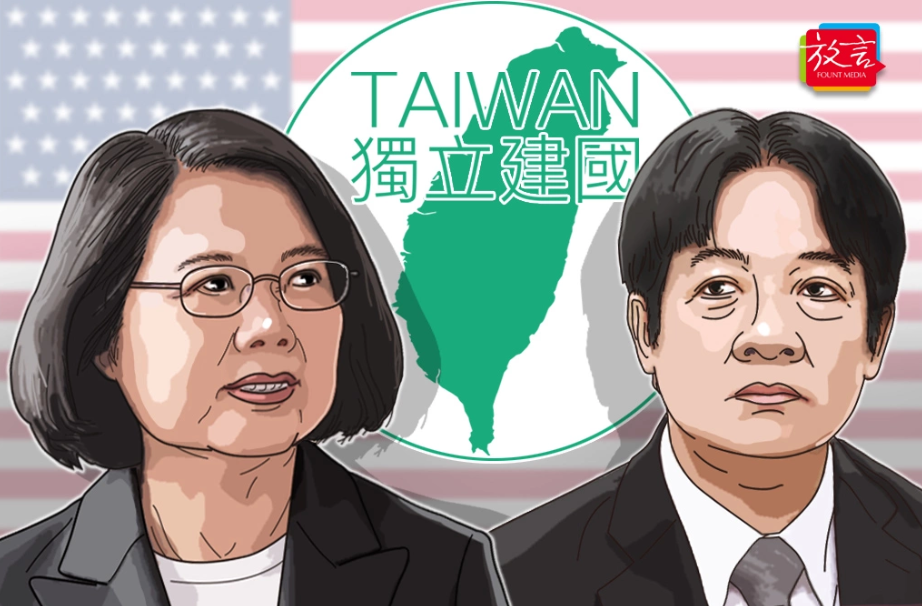
Taiwan came to understand deeply, as early as the period of Japanese colonial rule, the suffering of being governed by an outside power. Yet because the ancestors of Taiwan's people, apart from the indigenous peoples, had all come from Fujian and Guangdong in China, and because some anti-Japanese activists of the time had themselves gone to China to seek opportunity, the Taiwanese people did not immediately reject the Republic of China government's troops when they arrived to take over the island after the end of World War II. Once the two groups had lived alongside each other for a time, however, the newcomers came to regard the Taiwanese as a conquered people, displaying at every turn the superior attitude of a ruling clique; friction between the local population and the incoming officials and troops grew constant, ultimately triggering the February 28 Uprising of 1947. To secure what was now its last redoubt with nowhere left to retreat to, the Kuomintang government responded with village-sweeping massacres of the kind used against a foreign people, imprisoning and executing almost the entire generation of Taiwanese elites that had been so painstakingly cultivated over the years. In the long period of martial law and White Terror that followed, the people of Taiwan lost their freedom of speech, assembly, and association, the freedom to form political parties, and even the freedom to elect provincial- or municipal-level leaders and above or national-level representatives; they also suffered discriminatory treatment in employment and social status, and were denied the real benefits of democratic constitutional government and the rule of law—conditions no different from the oppression suffered by colonized peoples elsewhere in Asia and Africa. Because resistance against the Kuomintang government was so difficult to organize within Taiwan itself, it was not until the 1960s that students who had gone abroad to study began openly promoting the movement for Taiwan independence and statehood. Within the island, the Kuomintang government combined its repressive methods with tactics of division and co-optation against the Taiwanese people, carrying out a policy of ignorance-inducing education that indoctrinated them with official ideology and distorted their values, all in order to consolidate its rule. Even in the more than ten years since, under the Lee Teng-hui system, when a degree of democratization and localization was introduced, the authoritarian politics of the central government simply transformed into a politics entangled with local factional interests and "black gold" money politics; the government has continued, by its old methods, to keep the Taiwanese people believing in the fictitious structure of the "Republic of China," rather than recognizing the need to build, on their own initiative, a dignified and independent nation. If this continues, the danger posed to Taiwan by the threat of the People's Republic of China will be very difficult to eliminate. This is the most important reason why the old structure of the Republic of China must be dismantled and why independence and statehood must be achieved.
(2) Gathering the Talent for Independence and Statehood and Establishing Organization:
Independence movements often flexibly employ a variety of organizations and methods of action, operating both inside and outside their home territory. When facing intense hostility and violence from the other side, they must recruit comrades and build organizations covertly, or else direct their operations from a foreign base. The caliber of the leadership cadre and the tightness of the organization are the most important factors determining success or failure.
East Timor is a prime example of a struggle sustained under extremely harsh conditions, led above all by the Revolutionary Front for an Independent East Timor (FRETILIN) and by movement leaders Xanana Gusmão, José Ramos-Horta, and Bishop Carlos Belo. FRETILIN began as the Timorese Social Democratic Association (ASDT), formed to prepare a political party when Portugal announced it would give up its colonies; but as circumstances changed, it renamed itself in step with independence movements across Africa and demanded that Portugal grant East Timor immediate independence. FRETILIN also established an armed wing called FALINTIL, which waged guerrilla warfare in the mountains. Gusmão took command of the guerrillas in 1978 after FALINTIL's leader was killed by Indonesian forces; he was captured in November 1992 and released in October 1999, and may well become East Timor's future president. Ramos-Horta helped found FRETILIN in 1974 and fled to Australia the following year when Indonesia invaded East Timor, becoming the organization's representative at the United Nations; his unmatched skill in traveling from country to country to publicize the independence movement was second to none. In 1988, FRETILIN united all resistance forces to form the National Council of Maubere Resistance (CNRM), renamed the National Council of Timorese Resistance (CNRT) in 1998. After the referendum decided in favor of independence, it was the CNRT that drew up the plan for national reconstruction.
Vietnam offers an example of a newly independent state that took the socialist or communist path. The Vietnamese Communist forces led by Ho Chi Minh first led the resistance against French colonialism, and then waged a war of liberation against the United States and its client state, South Vietnam. Before the end of World War II, Ho Chi Minh's activities took place mostly in southern China. In 1925 he founded the Revolutionary Youth League of Vietnam in China, having earlier joined the Communist Youth League; in 1928 he was sent to the Communist University of the Toilers of the East in the Soviet Union for training; and in 1930 he returned home to unite three already-existing communist organizations into the formally established Communist Party of Vietnam, moving its center of activity back from China to Haiphong and Saigon before later holding meetings in Hong Kong, at which point the party was renamed the Communist Party of Indochina. During World War II, he organized the Viet Minh (Vietnam Independence League) and an independence party; in 1945 Ho Chi Minh proclaimed the founding of the Democratic Republic of Vietnam and became head of its government. In 1951 the Communist Party of Indochina was reorganized as the Vietnam Workers' Party, and the Vietnamese national united front was likewise reorganized; in 1962 the People's Revolutionary Party of Vietnam was established, and in 1969 the Communists backed the founding of the Provisional Revolutionary Government of South Vietnam. The Vietnamese Communists endured repeated setbacks, reorganized themselves each time, and gradually built guerrilla bases across the country; their organizational model and methods were heavily influenced by the Soviet and Chinese Communist Parties. In building their movement, the Vietnamese Communists placed particular emphasis on the long-term education and recruitment of nationalists and labor activists, which allowed them to respond independently to upheavals erupting in different regions while continuing to operate from secret bases at any time. Ho Chi Minh's plain, shrewd, resolute, yet flexible and adaptable character proved highly advantageous both for integrating various organizations and for tracking shifts in foreign strategy.
Under the harsh rule of the Kuomintang government, Taiwan's opposition movement first developed within the island through such channels as the Local Self-Government Research Association, the attempt to form the China Democratic Party, and "tangwai" (outside-the-party) activities. At the turn of the 1970s and 1980s, the Kaohsiung Incident (Formosa Incident) took place, and a rising generation of elites was arrested and imprisoned on charges of sedition; afterward, the families of those involved and their defense lawyers stepped forward to carry the movement on. As these individuals were elected one after another to public office, they formed the Tangwai Public Policy Association to pursue struggle within the system, and eventually, in September 1986, the first native Taiwanese political party—the Democratic Progressive Party—was born, after which the DPP took the lead in the political movement. Overseas, the World United Formosans for Independence openly led the independence and statehood movement, supported by organizations such as the World Federation of Taiwanese Associations, Taiwanese American associations, the Formosan Association for Human Rights, and the Formosan Association for Public Affairs, which worked both to voice support for the movement at home and to carry out publicity work abroad.
(3) Carefully Choosing Effective and Forceful Methods of Struggle:
An effective method of struggle must be aimed at the right goal and must choose the most suitable means. Goals and means are often linked in a chain, each link connected to the next, sometimes requiring step-by-step resolution. As for method, one can choose between reform within the system or revolution outside it, between gradualism or radicalism, between moderation or violence—the choice made in light of one's own conditions, the adversary's conditions, and the surrounding environment. No single approach is inherently better or worse than another. Among the various models of independence movements, those of Vietnam and East Timor stand out as the most moving. Vietnam's independence movement, beyond pursuing a war of national liberation for an independent nation, also carried the significance of a communist revolution against the old social and economic structure. East Timor's model, on the other hand, was shaped by the brutality of the Indonesian government and by the East Timorese independence groups' adoption of methods resembling the people's liberation struggle of communist parties. In general, independence struggles by peoples in Asia, Africa, and Latin America against colonialism tended to be more intense when they were entangled with the great-power balance-of-power struggles of the Cold War. National independence movements in the Middle East and Central-West Asia, when connected to militant Islamist groups, are more prone to adopt violent means—the Palestine Liberation Organization, Chechnya, and the secessions of the various republics of the former Yugoslavia all belong to this type.
Among all these independence movements, few resemble Singapore's, which was accomplished through a parliamentary constitutional-amendment procedure without the former colonial power, Britain, even being aware of it in advance, at a time when the Malay faction within the Federation of Malaysia was eager to be rid of Singapore—and neither side suffered any casualties or losses in the struggle for independence.
As for the three Baltic states, their first bid for independence came during World War I, at a time when most European countries (Germany among them) were exhausted by war and the idea of national self-determination was being actively promoted internationally; in addition, the Russian Revolution was at that time pursuing a revolution against the old order guided by a relatively pure Marxist-Leninist ideal, not yet having entered the era of Stalinist totalitarian rule of the 1930s—so their declarations of independence met with relatively little resistance. Their second bid for independence came after the peoples of the Soviet Union, Communist Party members included, had endured seventy years of repressive rule; once they were confronted with the policy of openness first advocated by Gorbachev, not only did the movement groups come to believe that large-scale mass rallies and demonstrations were an effective way to express their will, but even the ruling Communist Party cadres of the three Baltic republics sided with the popular front to seize the opportunity for independence and self-rule. Their moderate methods of struggle—such as the "Baltic Chain," the "Helsinki 86" movement, and the various "popular fronts"—along with the way the three republics' local Soviets backed the independence movement groups through parliamentary resolutions, left a deep impression. Perhaps the world of the future will follow this moderate, rational approach, consistent with the principles of political participation, in resolving the disputes that arise from political movements.
Within Taiwan, the independence movement has always been a target that the ruling Kuomintang clique sought to suppress and destroy by any means necessary. Far from ever having the option to resort to violence, independence organizations and parties holding similar views have instead repeatedly been vilified, sown with internal division, and intimidated—even subjected to the invocation of the threat of Chinese military force—all aimed at deterring the Taiwanese people from supporting Taiwan independence and isolating the movement. It should be understood that, especially as the twentieth century drew to a close, the methods of revolution grew increasingly diverse, to the point that it was no longer necessary to follow the methods prescribed by traditional revolutionary theory. After its founding, the DPP instead adopted a strategy of entering the system in order to reform it, closely watching for the right opportunities to make the most advantageous use of them. Given the opportunities currently available, contesting elections for national office to win a legislative majority, and winning the presidency to direct national affairs, remain goals well worth the movement's coordinated effort to achieve. But in taking public office, one must be especially wary of being contaminated and softened by the dye-vat of the existing system, and must never forget that the work of independence and statehood remains unfinished.
(4) Declaring Independence and Statehood and Winning International Support:
When a modern nation-state achieves independence and statehood, it will invariably issue a declaration of independence to the outside world, and this generally takes one of three forms: first, declaring independence and statehood once all preparations are complete, all procedures finished, or nearly so; second, staking out one's position early, at a specific moment, in order to preempt possible interference; and third, a form of advance notice, announcing in advance that a new state will be founded in a given year and month. Which of these forms is chosen depends closely on the course and circumstances of the particular independence movement.
The Republic of Singapore issued its declaration of independence to the world after the Parliament of the Federation of Malaysia completed the requisite legal procedures. Ho Chi Minh of the Vietnamese Communists, when French forces were defeated at Dien Bien Phu in 1954 and the Paris Peace Agreement was signed dividing Vietnam into North and South, issued a declaration proclaiming the founding of the Democratic Republic of Vietnam, so as to contend with the Republic of Vietnam established in the South and to claim legitimacy as the government for the whole of Vietnam; later, in 1975, once the Vietnamese Communists had unified the entire country, the state was renamed the Socialist Republic of Vietnam. East Timor, for its part, adopted two different approaches at two different times. The first came when Portugal announced in 1974 that it was giving up its East Timor colony, and Indonesia sent in troops to invade while various East Timorese political groups were still preparing to form parties; in response, FRETILIN issued a declaration proclaiming the Democratic Republic of East Timor on November 28, 1975. The second came after the people of East Timor voted by referendum at the end of August 1999 to become independent of Indonesia, when the National Council of Timorese Resistance (CNRT) negotiated with the United Nations and announced in advance its plan to found the new state within two to three years. The PLO likewise adopted the third approach, though its goal of statehood in 1999 was not met, and whether it will be realized in 2000 remains uncertain. The two successive independence movements of the three Baltic states also each culminated in a formal declaration of independence to the outside world, as has been the case for virtually every other country that has broken free of colonialism to achieve independence.
A newly independent state's declaration of independence carries definite significance both politically and under international law. Politically, it serves as both an announcement and a source of inspiration for the ordinary people within its territory, helping to build cohesive loyalty to the new state and marking the starting point of the new state's authority; toward the outside world, it proclaims the new state's existence within the international community, serving as the first step toward gaining recognition as a state.
Under international law, a declaration of independence is not itself the source of legal effect, but under the currently prevailing "declaratory theory" of state recognition, a declaration of independence is nonetheless closely tied to state recognition. If a new state comes into being smoothly, leaving no room for dispute over the fact of its founding, then once the state is established it will be considered to already possess international legal personality as a state, and recognition by other countries becomes merely a formality, a matter of declaration. Still, most international law scholars hold that if the founding of a state is subjectively viewed by another, related country as a secession from part of its own territory, and is thus disputed, then—in order to avoid having the new state's very statehood called into question—it is preferable, after issuing the declaration of independence, to actively seek recognition from as many other countries as possible, so that the matter is clearly confirmed.
After issuing a declaration of independence, a state must then address the questions of joining the United Nations and other international organizations and establishing diplomatic relations. Of course, even before formally achieving independence and statehood, a movement can also work to join the United Nations as an observer or quasi-state (as the PLO did); regardless of whether such efforts succeed, they will always add to the legitimacy of the independence movement and help win international support.
Before issuing a declaration, one important method of struggle is the referendum: using a high percentage of public support for independence in a referendum result to demonstrate the people's will for independence is the most democratic, most moderate, and most procedurally just approach, and is certain to win the sympathy and support of people the world over. Should a hostile country choose to oppose it, that country will only bring shame upon itself.
It must also be mentioned here that, in the course of achieving independence and statehood, should any foreign country put forward claims unfavorable to us regarding Taiwan's independence, Taiwan should immediately and clearly refute them, making its position on independence and statehood unmistakably clear.
(5) Drafting a New Constitution, Rebuilding the Government, and Planning the Affairs of the New State:
At this stage, the work shifts primarily to nation-building itself. Establishing a new state requires a new constitution to govern its operation—this is the final, indispensable step in completing independence and statehood. Countries have followed four models of constitution-making: first, constitution-making born of revolution, as with France's 1791 constitution after its Revolution, or Soviet Russia's 1918 Leninist constitution after its Revolution; second, constitution-making prompted by war, as with the postwar constitutions of Japan, Italy, and East and West Germany after World War II; third, constitution-making for independence and statehood, as with the United States after its War of Independence, and the many countries that drafted constitutions after gaining independence from colonial rule following World War II; and fourth, constitution-making arising from fundamental restructuring of the political system, as when the republics of the former Soviet Union and the satellite states of Eastern Europe drafted new constitutions one after another following the Soviet collapse of 1989. Taiwan's future constitution-making should follow the third model, though if reducing resistance requires a gentler approach, the fourth model may also serve. To thoroughly resolve the predicament posed by the old structure of the Republic of China, Taiwan should adopt the method of drafting and promulgating an entirely new constitution for its new state.
In the process of constitution-making, careful attention must be paid to the democratic character and legitimacy of procedures such as the constitutional convention, and a procedure for ratifying the draft constitution by referendum is indispensable.
Second, rebuilding the machinery of government is also important work at the nation-building stage. Although the operational structure of government will mainly be laid out in the new constitution, in any case the Five-Power Constitution's five-branch system should be abolished in favor of a three-branch separation of powers. As to whether to adopt a parliamentary or a presidential system, given Taiwan's current international environment and political ecology, a presidential system appears more suitable, with a single-chamber (unicameral) legislature.
Another important task in founding the new state is to redesign national policy from the ground up. Once the executive organization, personnel, and functions have been rebuilt, public policy and legislation must be reworked across every policy domain, with international relations (including relations with China) and national defense demanding the most urgent attention; in step with the new trends of globalization in the twenty-first century, the state should draw up a comprehensive strategic development plan and work to reshape the national consciousness of its citizens. But to promptly set public authority on a proper footing, an impartial national truth and reconciliation commission should be established under the Office of the President to address the wrongful, unjust, and unfair acts left over from the old system, with the ultimate goal of building a genuinely reconciled, harmonious, and just society for all citizens.