
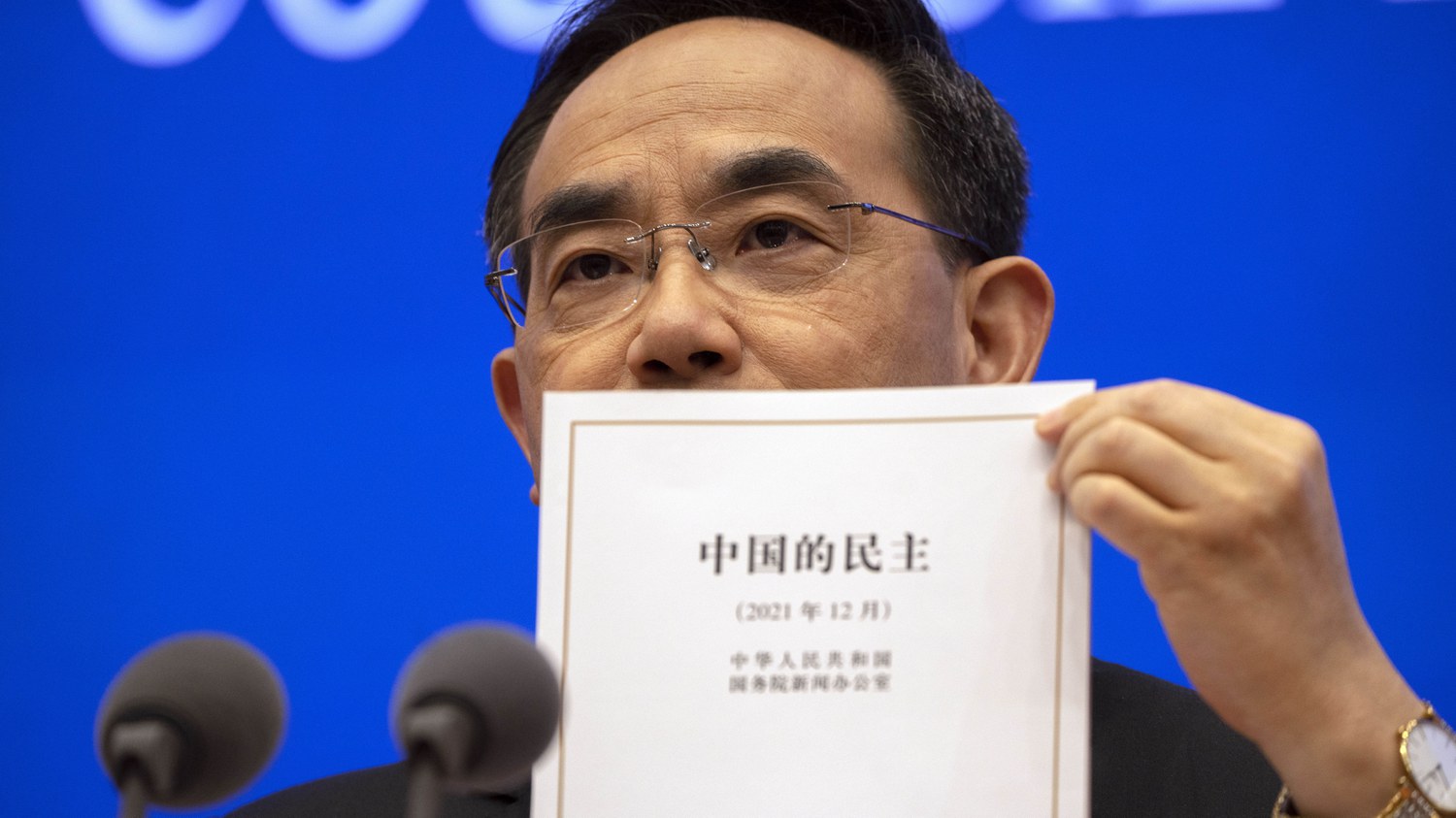
Preamble
We, the citizens of the People's Republic of China, in order to build a free, democratic, law-based, just, and prosperous modern nation, mindful of the lessons of history and cherishing hope for the future, and committed to guaranteeing citizens' fundamental rights and freedoms and advancing the nation's democratization, hereby adopt this Charter and pledge to abide by it.
Chapter One: General Provisions
Article 1 The People's Republic of China is a free, democratic, and law-based republic in which sovereignty belongs to all citizens.
Article 2 The state respects and guarantees human rights, and protects citizens' fundamental rights and freedoms.
Article 3 The state adopts a separation of powers, ensuring the independence of, and checks and balances among, the legislative, executive, and judicial powers.
Article 4 The state respects and protects private property, and encourages and supports the development of a market economy.
Chapter Two: Citizens' Rights and Duties
Article 5 All citizens are equal before the law and shall not be subject to discrimination of any kind.
Article 6 Citizens enjoy freedom of speech, of the press, of assembly, of association, and of procession and demonstration.
Article 7 Citizens have the right to take part in the administration of state affairs, exercising their political rights through the right to vote and to stand for election.
Article 8 Citizens have the right to basic public services including social security, education, and healthcare.
Article 9 Citizens have the duty to pay taxes according to law, to abide by the law, and to safeguard national security and public order.
Chapter Three: State Institutions
Section 1: The President
Article 10 The President is the head of state, exercises executive power on behalf of the state, and is responsible for the nation's overall policy and foreign affairs.
Article 11 The President shall be elected by universal suffrage for a term of five years and may serve one consecutive additional term.
Article 12 The President shall appoint the Premier, preside over cabinet meetings, and bear ultimate responsibility for the formulation and implementation of government policy.
Section 2: The Legislature
Article 13 The National People's Congress is the state's highest legislative body, composed of representatives elected by universal suffrage, and exercises legislative power.
Article 14 The National People's Congress shall consist of two houses: an upper house, the Senate, and a lower house, the House of Representatives.
Article 15 The Senate represents local interests and shall be elected by the provinces, autonomous regions, and municipalities directly under the central government; the House of Representatives represents national interests and shall be elected nationwide.
Article 16 The legislature is responsible for enacting and amending laws, approving the national budget, and overseeing the work of the government.
Section 3: The Executive
Article 17 The State Council is the state's highest administrative body, composed of the Premier, Vice Premiers, and the heads of the various ministries, and is responsible for national administration.
Article 18 The Premier shall be nominated by the President and appointed upon approval by the National People's Congress, and shall be responsible for presiding over the work of the State Council.
Article 19 The heads of the various ministries shall be nominated by the Premier and appointed by the President, and shall be responsible for the administrative affairs of their respective ministries.
Section 4: The Judiciary
Article 20 The Supreme People's Court is the state's highest judicial body and independently exercises the power of adjudication.
Article 21 The Supreme People's Procuratorate is the state's highest procuratorial body and independently exercises the power of procuratorial oversight.
Article 22 People's courts and people's procuratorates at all levels independently exercise the power of adjudication and procuratorial oversight, free from interference by administrative organs, social organizations, or individuals.
Chapter Four: Local Self-Government
Article 23 Local people's congresses at all levels are local organs of state power, elected by universal suffrage, and exercise local legislative power.
Article 24 Local people's governments at all levels are local organs of state administration, responsible for local administrative affairs.
Article 25 Local people's courts and people's procuratorates at all levels are local judicial and procuratorial organs, and independently exercise the power of adjudication and procuratorial oversight, respectively.
Chapter Five: The Economic System
Article 26 The state practices a socialist market economy, protecting the equal status of, and joint development between, the public and non-public sectors of the economy.
Article 27 The state respects and protects the right to private property, and safeguards the lawful business rights of enterprises and individuals in accordance with law.
Article 28 The state encourages scientific and technological innovation and industrial upgrading, and promotes high-quality economic development.
Chapter Six: Social Security
Article 29 The state shall establish and improve a comprehensive social security system, guaranteeing citizens' basic livelihood in old age, illness, and unemployment.
Article 30 The state practices a system of compulsory education, guaranteeing citizens equal access to education.
Article 31 The state guarantees citizens' right to health and shall establish a sound system of public health and medical services.
Chapter Seven: Environmental Protection
Article 32 The state adheres to a strategy of sustainable development, protects and improves the ecological environment, and prevents and controls pollution.
Article 33 The state promotes green development and advocates energy conservation, emissions reduction, and the recycling of resources.
Chapter Eight: Freedom of Information and Transparency
Article 34 The state guarantees citizens' right to know, ensuring that government information is open and transparent.
Article 35 The state shall establish and improve a system for the disclosure of information, guaranteeing that citizens can obtain timely and accurate information about government and public affairs.