
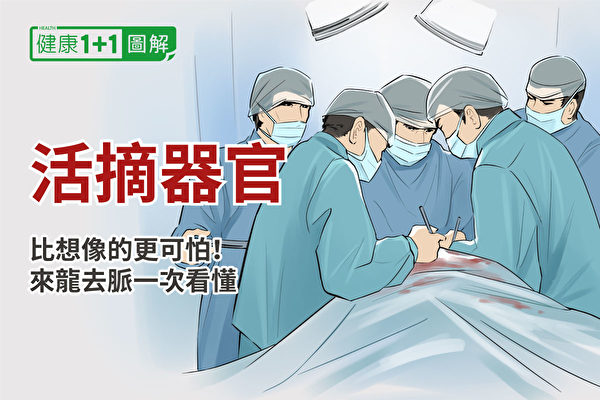
On February 20 of this year, CCP state media reported that Shanghai had dispatched a rescue helicopter to complete an organ transport mission from Pudong Airport to the operating room of Shanghai Pulmonary Hospital, affiliated with Tongji University. Using a helicopter for the transport doubled efficiency: a trip that would take a car 90 minutes took the helicopter just 11 minutes.
With "green channels" for human organ transport now established at civil aviation airports across the country, the fact that rescue helicopters are now also being spared no effort to ensure rapid organ transport has once again raised public suspicion: "Civil aviation and now helicopters too! The shipping cost on this human-parts delivery order isn't cheap! What ordinary citizen could possibly afford a medical arrangement like this?"; "Being able to deploy a helicopter means whoever this is, they're no small player!"
Indeed — who else could commandeer a city's emergency rescue helicopter fleet for organ transport, if not high-ranking CCP officials and the privileged elite?
Infant kidney transplants have already appeared in Chinese news reports. On February 27, 2023, the Xinmin Evening News reported that a joint research achievement between Renji Hospital, affiliated with Shanghai Jiao Tong University School of Medicine, and Shanghai Children's Medical Center, had been published in an authoritative journal (the American Journal of Transplantation). That joint research achievement was this: the hospital had transplanted the kidneys of infants who were only 1 day and 3 days old, respectively, into two adult recipients.
According to the latest 2023 investigative report from the World Organization to Investigate the Persecution of Falun Gong (WOIPFG), using children's organs for adult transplants has long been common practice at multiple hospitals across mainland China. Although China's national organ allocation guidelines nominally state that children's organs may not be used for adult transplants, and that doing so would be a violation, the reason it counts as a "violation" has nothing to do with ethics — it is simply because there usually aren't enough organs available for pediatric transplants in the first place. Chinese transplant specialists themselves say the state has never actually said children's organs cannot be given to adults.
Turning to infants as a source of organs is very likely an effort in service of CCP officials' pursuit of a "150-year lifespan." One important reason for this is that infant organs contain stem cells, which produce less rejection in the recipient, allowing the recipient to reduce or avoid taking immunosuppressant drugs altogether. This matters because immunosuppressants also weaken a person's own immunity against new viruses like COVID-19. Facing the constant threat of a new outbreak, the high-risk group of people who receive organ transplants are grasping at this as a lifeline.
Huang Jiefu, former vice minister of the CCP's Ministry of Health, said in a 2007 media interview that organ transplantation in China began with the country's first kidney transplant in 1966, while liver transplants began in 1977; by 1983, a total of 57 liver transplants had been performed, but because 54 of these patients had late-stage liver cancer, the surgical outcomes were poor — 80 percent of patients died either during surgery or within three months afterward, with the longest surviving patient living only 264 days.
Given the conditions at the time, why would anyone perform organ transplants on terminal cancer patients in the first place — and who would even qualify to be treated as "a dead horse ridden as if it were still alive"? Once again, only high-ranking CCP officials or their family members.
Not many such cases have ever come to light, but even the handful that are known are chilling enough.
Using the Organs of Prisoners of Conscience to Extend the Lives of Senior Officials Has Long Been CCP Practice
In his book The Eyes of China, Hu Ping documented the inside story of how Zhong Haiyuan — branded an "active counterrevolutionary" during the Cultural Revolution for supporting Li Jiulian — had her kidneys harvested while still alive. Zhong Haiyuan was executed on April 30, 1978. Before her execution, she had already been designated as a kidney source for a high-ranking cadre's child in need of a kidney transplant, and was therefore subjected to inhuman treatment: her kidney was removed while she was still alive. She was first injected three times with an imported anticoagulant drug using a large metal syringe of the kind used on cattle and horses; when she was shot, the executioner fired into her upper back, and while her heart was still beating, her kidney was removed from her living body.
The book The Price of History: Death Files of the Cultural Revolution likewise records the case of Li Lian, who had her kidney removed while alive in 1970. Li Lian, a young woman executed as a "counterrevolutionary," was, while being transported to the execution ground in a prison van, forced by four armed police officers to turn her body around, her face and body pressed flat against the wall of the van. Her clothing was yanked up her back, and a gleaming scalpel sliced open a wound the size of a palm on her right flank... within moments, a kidney, still dripping with crimson blood, was dropped onto a pristine white porcelain tray. An operating room at a hospital was waiting urgently for that kidney, which was about to be transplanted into the body of a Party leader.
Ethan Gutmann, an American writer and journalist who has long followed China's human rights situation, records in his book The Slaughter: Mass Killings, Organ Harvesting, and China's Secret Solution to Its Dissident Problem that in early autumn 1997, a young Uyghur doctor was quietly informed by his hospital mentor that "five Chinese government officials — big shots, Communist Party members, with organ problems — were already admitted to the hospital, and he was needed to go to the political-prisoner side of the Urumqi prison — not the criminal side — to draw blood samples."
The background to this incident is that on February 5, 1997, the Ghulja (Yining) incident occurred, in which Muslim protests broke out in Ghulja and across the whole of Xinjiang, and the CCP responded with a violent crackdown and mass arrests. Gutmann considers the evidence this doctor provided to be extremely damning, as it directly proves that the CCP harvests organs from political prisoners to extend the lives of its senior officials. In his book, he argues that this kind of mass killing for organ harvesting from political prisoners has not only existed but continues to this day, and he pays particular attention to Falun Gong practitioners, describing this as the CCP's secret method for "solving" the problem of political prisoners.
2000 Was the Turning Point in the Rising Lifespans of Senior CCP Officials
In September 2019, an advertisement for the "981 Leadership Health Project" spread virally through mainland Chinese WeChat circles one Sunday, introducing this medical service established exclusively for the CCP's top leadership. The promotional video declared: "Over more than 60 years of exploration and practice, the health care program for [Party] leaders has made tremendous progress... The data shows that the average lifespan of Chinese leaders far exceeds that of leaders of Western developed countries over the same period."
A chart in the video comparing the lifespan curves of Chinese, American, and British leaders shows that although the CCP's life-extension program has been underway for more than 60 years, before the year 2000 CCP leaders' lifespans exceeded those of American leaders by only 2 to 3 years. Starting in 2000, however, the lifespan curve for CCP leaders rose in a sharp linear climb, and by 2010 had already surpassed American leaders' lifespans by roughly 10 years — a lead that has held steady ever since. In other words, the year 2000 marks the turning point at which CCP leaders' lifespans began to rise dramatically.
Why would American leaders, who have access to the world's most advanced medical care, end up with shorter lifespans than Chinese leaders? According to sources with inside knowledge, the secret behind CCP leaders' longevity lies in continually replacing their organs with healthy ones harvested from young people, along with regular injections of serum supplied by armed police soldiers to keep the transplanted organs viable over the years.
The video also mentions that the goal of the "981 Leadership Health Project" is to extend leaders' lifespans to 150 years, with one key focus being "organ function regeneration."
2000 Was the Starting Point of the Explosive Growth of China's Organ Transplant Industry
In an article published in 2000, Huang Jiefu noted that over the 23 years from 1977 to July 1999, a total of only 228 liver transplants had been performed nationwide — an average of fewer than 10 per year.
But data provided by the international organization World Organization to Investigate the Persecution of Falun Gong (WOIPFG) shows that after 2000, the number of organ transplants in China grew exponentially. For instance, in just a year and a half — from January 1, 2005, to June 24, 2006 — 5,644 liver transplants were registered in mainland China, averaging 3,000 to 4,000 per year, which is 300 to 400 times the average annual number of liver transplants before 2000.
Another fact that cannot be avoided is that a massive wave of organ transplants suddenly swept across China after 2000. Within just a few short years, the number of organ transplants in China grew explosively; large numbers of transplant centers and tissue-matching centers were rapidly established across the country; the supply of donor organs became so abundant that patients could be matched and operated on within one to two weeks; and because wait times for organ transplants were so short, tens of thousands of foreigners began traveling to China specifically for "transplant tourism."
Organ transplantation in China had originally been a privilege reserved exclusively for the powerful elite, yet within just a few years it became a medical service that anyone with enough money could purchase. This enormous shift depended entirely on a sudden, massive increase in the supply of donors — and behind it lies an enormous, hidden atrocity...
Jiang Zemin Ordered the Live Harvesting of Organs From Falun Gong Practitioners
In July 1999, Jiang Zemin insisted on launching a crackdown against practitioners of Falun Gong, a discipline based on the principles of Truthfulness, Compassion, and Forbearance. His reason was nothing more than jealousy, provoked by the sheer number of people practicing Falun Gong. Many kind-hearted Falun Gong practitioners, unable to understand why the state would forbid such a beneficial practice, flocked to Beijing to petition the authorities, hoping to tell the world and the CCP's top leadership that Falun Gong was good and righteous.
Jiang Zemin treated Falun Gong as a political enemy. At the central work conference where the crackdown on Falun Gong was mapped out, he declared, "I refuse to believe the Communist Party cannot defeat Falun Gong," and demanded that Falun Gong practitioners be "defamed in reputation, cut off financially, and destroyed physically."
Among the known measures taken to carry out this "physical destruction" of Falun Gong practitioners are Jiang Zemin's order to the public security system that "deaths [of Falun Gong practitioners in custody] will be counted as suicides," countless unspeakable crimes in which people simply vanished without a trace, and Jiang Zemin's personal order for the live harvesting of organs from Falun Gong practitioners.
Under Jiang's orders and tacit approval, a whole array of horrifying atrocities followed — Gu Kailai's so-called "Dalian corpse factory," Wang Lijun's so-called patented "brainstem injury device," and more — every one of them a bloody method for stealing organs from and torturing to death Falun Gong practitioners.
The book The Ultimate Goal of Communism writes: "If someday in the future, someone were to come forward and reveal that Jiang Zemin once had police and military personnel throw 500 Falun Gong practitioners, en masse, into the boiling molten steel of a furnace at a steel plant in Dalian — watching as these truly good people, people who wished only to cultivate their hearts toward goodness, to put others before themselves, to walk selflessly along the sacred path of moral elevation, were burned alive in molten steel, their bodies, every inch of flesh, seared by steel at temperatures over a thousand degrees, until 500 living people simply vanished from the face of the earth — would people even be shocked? ...Given Jiang Zemin's utterly evil nature, committing an act of such rampant brutality, one that would enrage both gods and men, is exactly the kind of thing that is beyond human imagination yet entirely within his capacity to carry out."
During a telephone investigation conducted by the World Organization to Investigate the Persecution of Falun Gong, Bai Shuzhong, then head of the Health Department of the PLA's General Logistics Department, told the investigator: "It was Chairman Jiang at the time. There was a directive numbered 110, which was about carrying out these matters — that is, organ transplantation... After Chairman Jiang issued his directive at the time, a great deal of work was done across the country in the campaign against Falun Gong. When Jiang was in power, he took this matter very seriously — there were directives on it."
Treating murder as an act of loyalty to Jiang Zemin, "610 Office, the CCP's dedicated agency for persecuting Falun Gong, coordinated Falun Gong practitioners who had traveled to Beijing to petition, as well as those abducted and illegally detained across the country, through unified allocation, dispatch, transport, transfer, guarding, and accounting by the General Logistics Department. Under the General Logistics Department, more than a hundred general hospitals belonging to the various military branches, the Armed Police General Hospital, hospitals affiliated with military medical universities, general hospitals of the seven major military regions, and numerous affiliated hospitals launched or expanded their organ transplant operations, forming one vast, systematic killing machine."
China's organ transplant industry has risen to become the second largest in the world, and Huang Jiefu has boasted that China is now catching up to, and poised to overtake, the United States' position as the world's leading transplant power. As is widely known, the years of China's rise as an organ transplant power align precisely with the years of the CCP's brutal persecution of the Falun Gong practice community. Behind today's transplant industry lies the crime of the CCP's mass live harvesting of organs from Falun Gong practitioners over many years — an unforgivable original sin that the CCP can never erase.
The military, armed police, public security, courts, hospitals, doctors, and related medical device companies that bear this original sin have all been shackled to this killing machine that is the CCP. And driven by enormous profit, this killing machine continues to run at a frenzied pace. What's more, the demonic hand that steals organs has already extended beyond the Falun Gong community to Uyghurs, Tibetans, house-church members, dissidents, and even teenagers like Hu Xinyu.
One either colludes with the CCP, killing for profit, or becomes "human ore," living in constant fear that oneself or one's family will be harvested by the CCP. The crimes the CCP has committed are crimes against humanity, and it will surely face heaven's judgment — this evil Party must be dissolved. Only then, once it collapses, will every Chinese person who has voluntarily withdrawn from the CCP's organizations be spared its calamity, and finally be able to live a normal human life.