
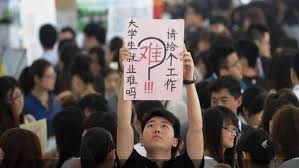
In mid-March, Shanghai's Civil Affairs Bureau and 27 other departments jointly issued the "Shanghai Implementation Plan for Building a Social Participation Support System for the Elderly to Promote Active Aging," emphasizing the need to "comprehensively encourage and support the continued participation of the elderly in economic and social development, leverage their experience, and contribute their silver-haired strength." On one side, young and middle-aged people struggle to find work; on the other, the authorities are promoting re-employment for the elderly. This so-called "retired but not resting" plan quickly ignited public outrage online, with waves of skepticism and mockery.
Taken purely as a policy text, this measure seems unobjectionable enough — against the backdrop of an aging population, encouraging the elderly to participate in society can enrich their lives while helping ease labor shortages. Yet the problem lies precisely here: any policy must be understood within its concrete social reality. Why would a measure ostensibly meant to "benefit people's livelihoods" provoke such widespread resentment? The answer is not found in the wording, but in the reality.
Official data show that by the end of 2025, China's population aged 60 and above had already exceeded 320 million, with 87 to 120 million people working past the standard retirement age, concentrated mainly in labor-intensive sectors such as catering, sanitation, security, and construction. At the same time, the number of job-seekers over 55 continues to rise. In other words, "elderly employment" is not some newly unlocked potential — it is a reality that has long existed and is now expanding. Against this backdrop, the so-called "encouragement" looks more like an official acknowledgment of an already established fact.
Yet the real logic behind this policy is not hard to understand. Placed in a broader context, everything becomes fairly clear: local government finances are under strain, pension payment pressure is rising, and the population is aging rapidly — these are all publicly acknowledged facts. Given such constraints, what is the most direct response? Not to increase benefits, but to cut spending; not to raise welfare, but to extend working life. Thus delaying retirement, raising the minimum contribution period, and encouraging re-employment together form a seemingly rational package of "technical solutions."
The trouble is, what these measures solve is a fiscal problem, not a social one. One might even say they ease the fiscal problem by expanding the social one. "Retired but not resting" is one link in precisely this chain of logic. It is not an isolated measure, but a natural extension, under conditions of an aging population, of China's current "low welfare, high pressure" development model. On the surface, it resembles policies in developed countries that encourage elderly employment — extending labor-force participation, tapping "silver-haired resources," easing the burden of pension provision — but there is a fundamental difference between the two: in countries that have already built comprehensive social security systems, elderly employment is an extension of a right; in China, it is closer to a substitute arrangement compensating for insufficient welfare protection.
This distinction, subtle as it may seem, is in fact decisive. Modern societies developed retirement systems not out of efficiency considerations, but out of concerns for fairness and security. That a person, having completed a working life, can rely on institutional guarantees for basic security and withdraw from competition with dignity — this is itself an important part of the modern social contract. It is only on this foundation that "contributing one's remaining energy" can become a voluntary choice. But if this foundation does not exist, then so-called "extended labor" can hardly be called a choice — it comes much closer to being a passive survival strategy.
Data from 2025 show that the average monthly pension for urban and rural residents was just 287 yuan, with the minimum standard only 163 yuan, and a huge gap between urban and rural areas. What does this mean? It means that after working for decades, a person still cannot obtain even the most basic sense of security through the system; it means that so-called "retirement," to a large extent, is merely a nominal category; it means that individuals must continue to rely on the market — rather than on institutions — to sustain their later years. In this situation, "elderly employment" is no longer an extension of the value of life, but a patch covering an institutional void.
At the same time, this policy will also have complex and far-reaching effects on the labor market. Officials emphasize that the elderly and the young have "different divisions of labor" and will not compete directly. But in reality, when overall job opportunities tighten and job quality generally declines, this division of labor becomes extremely fragile. In low-security, low-income sectors, employers' selection logic is very simple: whoever costs less and is easier to manage has the advantage. And the elderly fit these criteria precisely — they don't demand social insurance, accept lower wages, and have lower expectations of job stability.
As a result, a segment of the job market that should belong to young and middle-aged people is being reallocated to the elderly. The outcome is not "optimized resource allocation," but a kind of "race to the bottom": the young and the elderly compete for the same low-end positions on the same level, while middle-aged workers are further squeezed out under cost pressure. This not only worsens the employment problem, it also erodes the structure of relationships between generations.
In a normal society, different generations should complement and balance each other through institutional arrangements: the young provide vitality, the middle-aged carry out production, and the elderly receive security. But when the elderly are forced back into the competitive arena, this structure breaks down, and social relations slide toward a zero-sum game.
An even deeper problem is that this shift is changing the basic expectations of society as a whole. When young people see no stable path upward, when middle-aged people lack a secure space to accumulate savings, and when the elderly cannot obtain reliable security, a society's core narrative begins to shift — from "life can be improved through effort" to "one must keep struggling just to survive."
This shift means the fading of hope. And a society lacking hope must have its very stability called into question.
For a considerable period, the stability of the CCP system has relied heavily on so-called "performance legitimacy" — that is, exchanging sustained economic growth for the public's basic acceptance and compliance. But when growth slows, distribution becomes unfair, and welfare provision falls short — all appearing at once — the foundation of that legitimacy begins to crumble.
"Retired but not resting" is precisely a patchwork policy that has emerged against this backdrop. It can neither restore growth nor rebuild fairness, yet it continuously sends individuals the message that the regime will not provide adequate welfare protection, and that they must rely on themselves. Its direct consequence is a systemic decline in social expectations and the ongoing collapse of intergenerational trust. Young people face shrinking opportunities; middle-aged people bear positions that could vanish at any moment; the elderly, amid rhetoric of being "encouraged," feel the helplessness of being forced to keep working. In such a system, there are no true winners.
An even more far-reaching effect lies in how it shapes the trajectory of political evolution. When a society cannot ease its contradictions through institutional redistribution and security mechanisms, pressure must either be suppressed or displaced — and once the space for suppression gradually contracts and the space for displacement is gradually exhausted, these deferred contradictions will inevitably resurface in a more concentrated form. In this process, the so-called "stability" is in fact purchased at the cost of continuously accumulating discontent — and once that discontent crosses a certain threshold, it will no longer be a localized economic problem, but will rapidly escalate into a challenge to the entire system.
So policies like the CCP's "retired but not resting" are, in essence, continuously eroding the social foundation on which the system depends for survival. They shrink what remains of performance legitimacy, deplete the reservoir of trust between generations, and imperceptibly expand the space in which people imagine alternatives to the current system.
Historical experience shows that social transformation is rarely accomplished in favorable times — it is usually forced onto the agenda through a gradual accumulation of contradictions and an increasingly visible unraveling of problems. Only when the existing path becomes unsustainable, and patchwork adjustments can no longer conceal systemic flaws, does society truly begin to consider whether it needs an institutional arrangement entirely different from the current totalitarianism, in order to secure a dignified and protected path through life.
In this sense, all the difficulties visible in China today are not merely a manifestation of the darkness inherent in CCP totalitarianism — they are also, at the same time, the glimmer of a coming turning point.